What to Donate Before a Cleanout
Donate clean, usable items that a real recipient has agreed to accept before loading the disposal container. Separate those items early, protect their condition and arrange their transport or pickup independently of the dumpster rental.
Use condition and recipient fit to make the first cut
A donation candidate should be something another person or organization can actually use. Start with condition, completeness and function rather than the original purchase price. A useful item can still be a poor match for a particular recipient’s space, program or acceptance rules.
Look at furniture for stains, tears, damage and missing parts. Keep the hardware with an item that has been disassembled and record any missing component accurately. For an appliance or electronic item, identify its type and working condition rather than describing everything as “good stuff.”
Donation is not a guaranteed destination for everything you do not want. Recipient screening helps prevent a cleanup from becoming an unexpected handling burden for someone else. Get acceptance before assigning an item to the donation route, especially when the moving or renovation schedule is tight.
Houston Habitat ReStore is one example of specific rules
Houston Habitat’s ReStore lists furniture, home accessories, building materials, appliances and other categories, with detailed rules that differ by item. Its furniture guidance calls for clean items without pet hair, stains, tears or other damage. The organization screens donation-pickup requests and can decline those that do not meet its requirements.
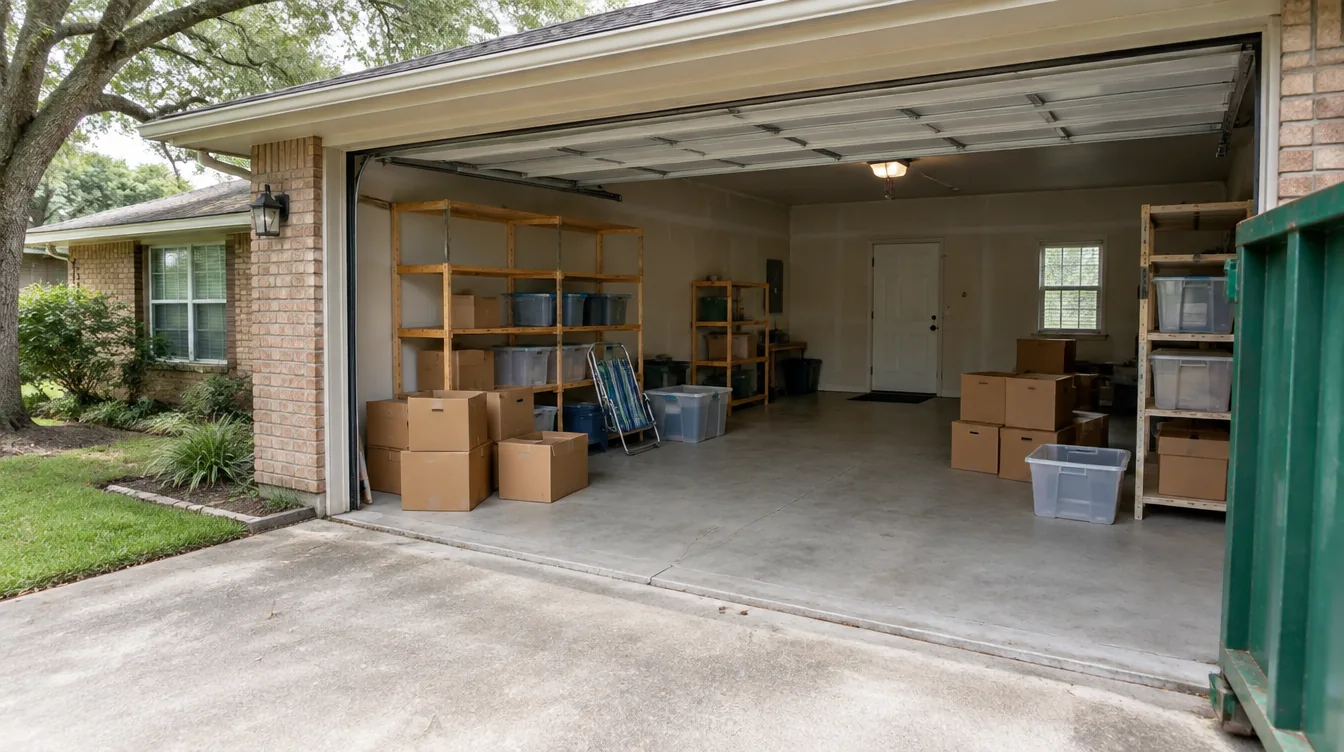
For residential pickup, the published instructions require items to be staged outside the residence or in a garage; drivers do not enter the home to retrieve them. That makes access planning part of donation, not just disposal. A sofa upstairs still needs a separate safe route to the accepted staging area.
Check the current ReStore acceptance and donation instructions for the exact item and pickup or drop-off arrangement. The organization’s rules do not establish a donation partnership or pickup service through a dumpster rental.
Other recipients have their own rules. A piece one organization declines might fit another program, but do not let repeated searching consume the time needed to finish the cleanup. Set a realistic decision point and choose a lawful alternative for items without an accepted reuse route.
Sort before estimating disposal capacity
| Group | Useful test | Next action |
|---|---|---|
| Keep | Do you want and have space for it? | Move to a protected area outside the cleanup flow |
| Donate or reuse | Is it usable and accepted by a recipient? | Arrange the separate handoff before loading |
| Recycle or special disposal | Does its material need a dedicated route? | Follow the applicable program instructions |
| Discard | Is it accepted for the rental? | Include it in the amount and material list |
Protect donation items from the working cleanup
Use clearly labeled areas for keep, donate and discard. If several people are helping, walk through those areas together. An item leaning beside a dumpster can be mistaken for waste; an item sitting under a tarp can still be damaged if the staging area is wet or unstable.
Keep donation candidates accessible until the handoff is complete. Do not put them inside the container as temporary storage. Retrieving furniture from beneath other material can be unsafe, and the item may no longer meet the recipient’s condition requirements.
Pack small parts and accessories with the related item. A cabinet door, appliance component or bed hardware bag is easier to keep track of before it is separated into several cleanup piles. Photograph the item in its actual condition so the acceptance conversation reflects what will be delivered.
Separate physical handling from donation acceptance
An accepted donation still has to be moved safely. Decide who will carry it, where it must be staged and which doors, stairs or turns are involved. Acceptance by a recipient does not mean that organization will remove the item from any location in the property.
NIOSH lifting guidance recommends planning the task, clearing the path and getting help or suitable equipment for heavy or awkward objects. A large usable item may be worth donating while still requiring paid or separately arranged handling. Do not attempt a risky move merely to avoid discarding it.
For a moving cleanout, coordinate donation and the move before committing the driveway to several vehicles at once. For a property turnover, establish who has authority over the contents before anyone donates or discards them. A practical reuse plan begins with ownership as well as condition.
Keep electronics and appliances out of the ordinary donation assumption
Electronics can contain personal information even when they no longer switch on normally. Use the appropriate device instructions to remove accounts and data, and choose a suitable electronics route when needed. A general donation acceptance does not establish secure data destruction.
Appliances have their own preparation needs. Refrigerant-containing equipment requires appropriate handling under EPA disposal rules; unplugging it is not the same as recovering refrigerant. Do not cut lines, release coolant or assume a donation recipient will perform that preparation.
If an item is not reusable, identify it separately in the cleanup plan. Furniture and appliances are review-dependent rental contents, while hazardous products and prohibited materials cannot go into the dumpster. A declined donation does not automatically become accepted container material.
Recalculate the rental after the reuse plan is real
Base the dumpster estimate on the material that will remain for disposal after accepted donations and retained belongings are removed. Do not subtract a large sofa or cabinet from the estimate just because you hope someone will take it. If acceptance is still pending, describe that possibility separately.
Capacity and material type both matter. Bulky furniture can use substantial space, while compact renovation material can add weight quickly. Compare the available container sizes around the confirmed cleanup rather than a rough room count.
This offer is self-loaded rental, with loading help arranged separately. It does not include a donation pickup, a promised recycling destination or tax advice. The recipient’s actual receipt and requirements govern any donation documentation you receive.
Use a decision deadline when a move is approaching
A moving cleanup needs a reuse plan that can actually finish. List the larger donation candidates early, send accurate photographs and describe their condition. Record which items have been accepted, which are awaiting an answer and which need another route. A hoped-for recipient is not the same as an arranged handoff.
Choose a practical point before loading when unresolved items must receive a final destination. That gives you time to update the disposal amount, arrange safe handling and preserve driveway access. It also prevents one uncertain sofa or cabinet from holding up an otherwise organized move.
If someone is collecting an accepted item, make the staging arrangement match the recipient’s instructions. Keep it protected and accessible, but do not move it into a dangerous or obstructive position. Separate collection vehicles from the dumpster delivery or moving-truck route where those activities would compete for the same space.
After the handoff, revise the remaining material list. A room may look much clearer after a large donation leaves, yet still contain many small items or renovation materials with different disposal needs. The final container choice should reflect what remains, not the original pile and not an optimistic estimate based on donations that have not happened. This makes reuse and disposal complementary steps instead of two competing plans for the same belongings.
Make reuse part of a finished cleanup plan
Choose the recipient, verify acceptance, arrange the handoff and protect the item until it leaves. Then put the remaining accepted disposal material into a clear rental request with your ZIP code, approximate amount, timing and proposed placement.
Request a quote for the remaining cleanup ↗ Review garage cleanout rental when sorting stored household contents is the main task.
Answered Questions
Should I place donation items next to the dumpster?
Use a separate clearly labeled and protected area. Items next to the box can be mistaken for waste or obstruct the loading route, and the recipient still needs an agreed handoff.
Does a working item have to be accepted by a charity?
No. Recipients control their own categories, condition rules and capacity. Get acceptance for the specific item before relying on donation as its destination.
Can a declined donation go straight into the rental?
Only when it is accepted for the actual rental and material category. Identify the item rather than assuming a charity’s refusal establishes dumpster acceptance.
Is donation pickup included with the rental?
No. Donation transport or pickup and any loading help are separate arrangements. The dumpster rental provides the agreed container for accepted cleanup material.