What Can Go in a Dumpster?
A dumpster can take only the materials accepted for its specific rental and load category. Keep prohibited chemicals, liquids, tires and asphalt roofing out; identify household items and dense debris before choosing the container.
Begin with material type, not the room it came from
“Garage junk” and “remodel debris” describe a project, not a reliable disposal category. A garage may contain cardboard, furniture, motor fuel and paint cans. A remodel may produce wood, drywall, flooring, fixtures, masonry and roofing. Those materials should not all enter the same container simply because they came from one address.
Make a short inventory before requesting the rental. Name bulky pieces and appliances, identify dense materials separately, and keep containers with unknown contents out of the loading area. Describe an unusual item rather than replacing its name with “miscellaneous.”
The self-loaded rental model means you or separately arranged helpers control what goes into the box. Give everyone the material rules before loading starts. A prohibited item added by another helper is still part of the load and can change the disposal problem.
Materials need different decisions
| Material group | Rental planning rule | Practical action |
|---|---|---|
| Household cleanup contents | Acceptance depends on the actual items | List furniture, appliances and unusual pieces individually |
| Remodel debris | Separate material types and dense components | Describe wood, drywall, cabinets, flooring and masonry |
| Concrete or dirt | Designated 16-yard arrangement with specific limits | Keep separate from ordinary household fill |
| Asphalt roofing and shingles | Prohibited | Use a suitable separate disposal arrangement |
| Chemicals, liquids and compressed contents | Excluded from the mixed cleanup load | Use the appropriate specialized route |
Materials that must stay out of the rental
Published restrictions prohibit asphalt roofing materials and shingles, whole used or scrap tires, liquids and paint cans, gases or compressed chemicals, hazardous and medical waste, and carcasses. Do not hide these items inside bags, furniture or boxes. Containment does not turn a prohibited material into an accepted one.
Keep paint products and liquids separate even when the rest of a project is ordinary household cleanup. A can found behind shelving may have dried material on its outside while still holding liquid inside. Do not open unidentified containers to test them by smell or mix their contents together.
The Texas Commission on Environmental Quality identifies products such as fuels, corrosive cleaners, some paints, pesticides, mercury-containing products and fluorescent lamps as household hazardous-waste examples. These items need a disposal route appropriate to their actual contents. The City’s Environmental Service Center information explains the residential program, acceptance and current requirements.
Furniture needs an item-level description
Furniture combines volume, shape and materials. A sofa can occupy a large part of a small container while leaving awkward voids around it. A dismantled cabinet can pack differently, but dismantling creates its own handling task and is not included loading labor.
List the type, approximate size and condition of each bulky piece in your request. A photograph helps show whether you are discussing a chair, a sectional or several assembled cabinets. Do not assume an item is accepted just because a different piece of furniture was acceptable on another job.
If an item is still useful, consider reuse before calculating the disposal load. Donation recipients set their own condition and access rules. Keep those candidates outside the dumpster until a separate destination is arranged, so an intended donation does not become an inaccessible piece under other debris.
Appliances can contain more than metal
An appliance may have refrigerant, electrical components, liquids, gas connections or other contents that change its disposal route. Identify the appliance by type rather than asking whether all “white goods” are allowed. A refrigerator and a disconnected washing machine do not present the same handling question.
EPA appliance-disposal guidance explains that refrigerant must be recovered properly before final disposal where the rules apply. Do not cut lines or release refrigerant to make an appliance ready. The rental does not include refrigerant recovery, utility disconnection or appliance preparation.
Use the proper appliance route and describe its preparation status before including it in a quote. The City’s separate heavy-trash rules, for example, require a certified-technician tag for refrigerators and freezers showing refrigerant removal. That municipal rule is not a private dumpster acceptance promise.
Concrete and dirt are weight decisions before volume decisions
Concrete, soil and other dense materials can reach a loading limit while a container still looks partly empty. Air space above the material is not evidence that more weight is allowed. The designated 16-yard concrete and dirt setup has material-specific restrictions; it is not permission to fill the box to its top.
Keep dense debris separate from household cleanup unless the agreed load category specifically addresses it. A few heavy pieces concealed under furniture make it harder to understand the actual waste stream. Give the amount and material description before selecting equipment.
Nominal capacity is the container’s volume class. Included disposal weight and a permitted fill line are separate terms. For a project involving both a room cleanout and broken concrete, plan the two waste groups before comparing container sizes. A larger household box does not replace the designated dense-material arrangement.
Renovation materials should stay identifiable
Write down each phase of the work: removed cabinets, drywall, wood, flooring and any masonry. This is especially useful when more than one trade will use the container. A rental intended for one material mix can change when another crew adds something different.
Keep prohibited roofing out even if the same property is having a roof replaced. Do not use another contractor’s published acceptance list as the rule for this rental. Equipment dimensions, disposal arrangements and accepted waste streams can differ between operators.
For an uncertain material uncovered during work, stop that material from entering the box until its category is understood. Older materials or unidentified chemicals should not be guessed into an ordinary cleanup load. This keeps a material-identification problem separate from the accepted waste already being collected.
The remodeling rental page focuses on scoping a project with several materials. It is useful when the container needs to support staged work rather than one pile already ready to load.
Turn a mixed garage into a clear material inventory
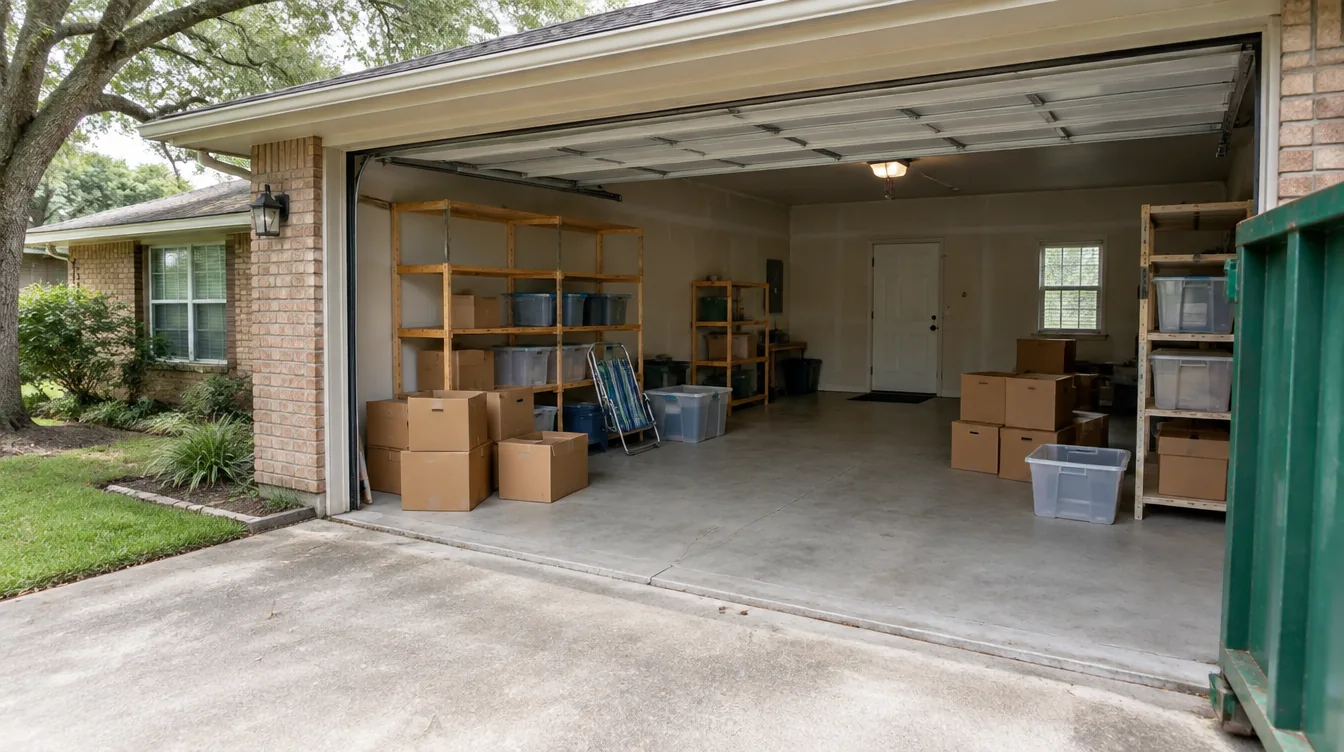
Consider a garage with empty packaging, an old chair, a refrigerator, garden chemicals and a stack of removed floor tile. Calling it “one garage load” hides the decisions. Begin by separating the chemicals from the ordinary cleanup area. Identify the refrigerator and its preparation needs, then record the chair as an individual bulky item. Describe the tile as dense renovation material rather than treating it as another box.
Next, estimate the amount of each remaining group. Photographs should show both the full pile and the unusual items clearly. A bag concealing the contents is not enough information to establish suitability. Keep labeled original containers for special products where it is safe to do so, and follow the relevant disposal instructions instead of pouring products together.
The result may be more than one disposal route. That is often a better plan than trying to make a single household container serve as a chemical collection point, appliance processor and dense-debris box. The amount left for the ordinary rental may also be smaller after reusable contents and special materials are removed.
Give any separate helpers the same final inventory. A detailed quote request is useful only if the actual loading follows it. When a new item appears, keep it aside until its disposal category is known rather than adding it to make the floor look clear. This preserves the material decision you made before rental and avoids burying a problem under the rest of the cleanup.
Make your request specific enough to choose the right route
Provide a material list, approximate amount, largest items and project ZIP code. Note any appliances, dense debris or containers with special contents separately. Add timing and placement photos so material suitability and delivery planning happen together.
Describe your cleanup materials ↗ Review the published material restrictions and designated concrete and dirt information before loading.
Answered Questions
Can I put paint in the box if the lid is closed?
No. Paint cans and liquids are prohibited by the rental restrictions. Keep them separate and use the appropriate disposal program rather than relying on a closed lid or a bag.
Does empty space above concrete mean I can add more?
No. Dense-material limits can be reached before a container is full by volume. Use the designated concrete or dirt arrangement and stay below its material-specific limit.
Is every appliance acceptable once it is unplugged?
No. Unplugging does not resolve refrigerant, gas, liquid or other disposal requirements. Identify the appliance and its preparation status before including it in the rental load.
Can household hazardous waste use the normal trash instead?
Use the appropriate hazardous-waste instructions for the product and your address. Do not mix chemicals into ordinary trash or the dumpster as a substitute for an accepted disposal route.