Junk Removal vs Dumpster Rental
Junk removal and dumpster rental divide the work differently: full-service hauling typically includes a crew moving the agreed items, while a self-loaded rental leaves the sorting and loading with you or help arranged separately. Long Point Roll-Off offers the rental approach for Spring Branch, Houston cleanups.
Choose by who will carry the material
The first decision is who does the physical work. If you want items carried from inside a property, your request needs a service scope that includes that labor. If you can load a container yourself or have separately arranged help, a dumpster rental gives the project a place to accumulate reviewed waste before collection.
Those are different jobs even when both end with material leaving the property. A container quote should not be compared with a crew-loaded cleanout as though the equipment price covers the same tasks. Sorting, carrying, disconnection, dismantling and demolition each need an assigned responsibility.
Long Point Roll-Off's rental model is self-loaded, with loading help arranged separately. Start with that distinction when deciding whether the service fits your project. A useful comparison is about the work you need completed, not which label sounds more comprehensive or which starting price looks lower.
Compare the sequence of a pickup with a rental period
A crew-loaded removal service generally works around a defined visit and an agreed item list. Ask a hauling company what its actual quote includes, how it handles stairs or long carries, and whether it will dismantle or disconnect anything. Do not assume every service advertised as junk removal includes the same labor or item acceptance.
A self-loaded rental supports a different sequence. You arrange delivery, sort and load during the agreed rental period, and arrange collection through the rental plan. That can suit a project where decisions and debris accumulate over time, provided you have space and labor for the container.
Neither model automatically resolves a tight deadline. A visit still needs availability, and a rental still needs confirmed delivery, enough loading time and collection. Compare real dates and responsibilities rather than assuming same-day service or a standard included weekend.
| Decision | Crew-loaded removal | Self-loaded dumpster rental |
|---|---|---|
| Moving material | Verify the agreed crew labor and handling scope. | You or separately arranged help load the container. |
| Project sequence | Usually organized around the agreed pickup visit. | Organized around delivery, loading period and collection. |
| Space needed | Access for the crew, items and hauling vehicle. | Container footprint, open-door area and truck operating access. |
| Quote comparison | Compare the complete labor, item and disposal scope. | Compare equipment, hauling, time, disposal allowance and separate labor. |
Projects that can suit a self-loaded container
A garage cleanout can benefit from sorting in stages. A container provides a destination for the approved discard material while you decide what stays. The advantage depends on keeping stored chemicals, tires and unusual items separate and having a practical carrying route.
For a moving cleanup, the timing and access matter as much as the amount. The moving truck and dumpster may need the same driveway. Plan their positions and dates together so one part of the move does not prevent the other from happening.
A renovation may produce waste in several phases, and a property turnover may combine contents with repair debris. A rental can form part of those plans when material acceptance, loading and collection are clearly defined. It does not supply a demolition or whole-property cleanup crew.
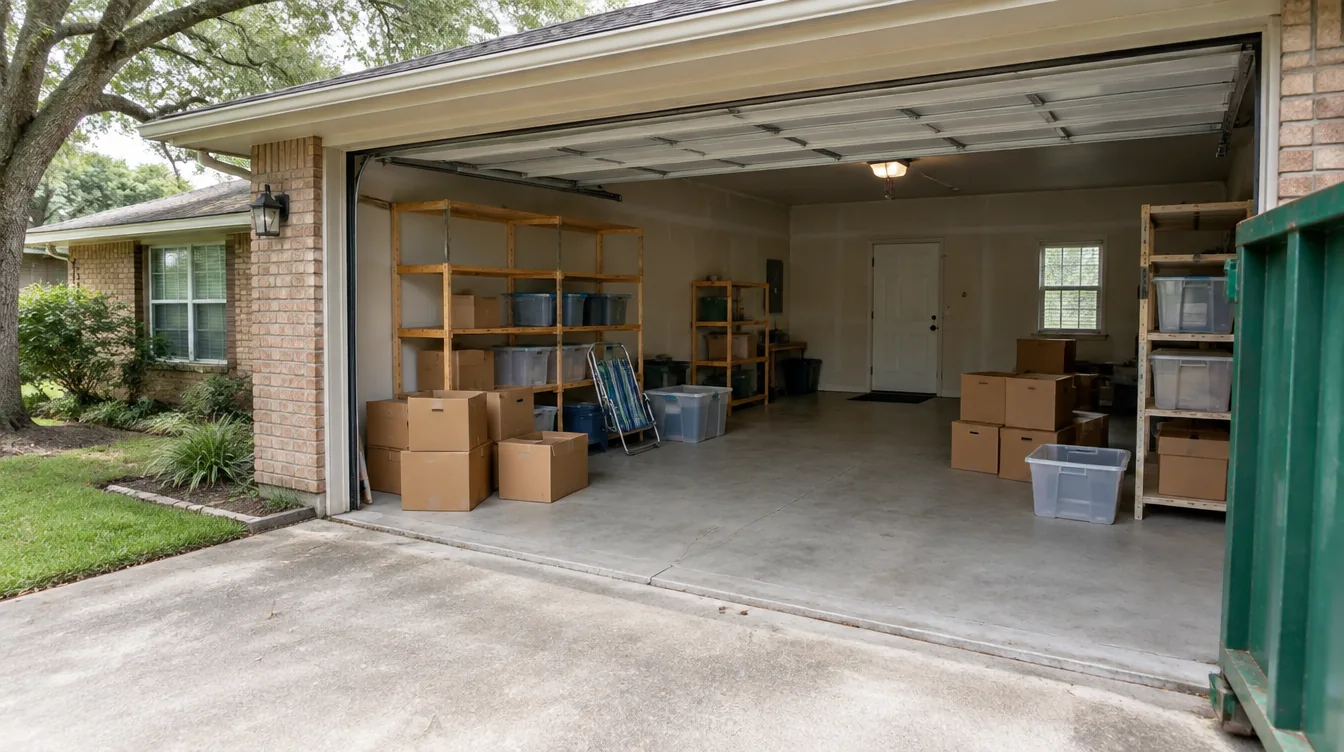
A small pickup and a whole cleanup are different estimates
One or two objects create a different problem from an ongoing room-by-room cleanup. For a small item list, compare the labor and transport needed for those specific objects with the space and time a rental would occupy. A large container can be unnecessary if most belongings are staying and very little is being discarded.
For a larger project, do not assume the number of rooms determines container size. Cabinets, intact furniture, loose packaging and dense debris pack differently. A rough inventory and photographs of the intended discard pile give either service a better basis for discussing the scope.
The published rental choices include a 12 yard option for smaller-cleanup comparisons, a 20 yard option and a 30 yard option for suitable larger loads. No project label guarantees a fit. Use actual material and access information to compare them.
Material acceptance applies to both service choices
A hauling crew's willingness to move an item and a rental container's acceptance rules are separate questions. Identify furniture, appliances, fixtures, dense material and unusual contents by name. A broad category such as household junk cannot tell a service what preparation or disposal route each object needs.
For these rentals, excluded material includes asphalt roofing material and shingles, whole used or scrap tires, paint cans, liquids, gases or compressed chemicals, hazardous and medical waste, and carcasses. Keep unknown products separate while sorting instead of loading first and trying to identify them afterward.
Concrete and dirt require the designated 16 yard setup and an actual material-specific loading limit. Do not choose a 30 yard container for concrete simply because a large box appears on a comparison chart. Read the materials guide and give the quote request the complete waste stream.
Compare the real access requirements
A crew-loaded service needs a route from the objects to its hauling vehicle. Discuss stairs, tight doorways, disconnection and long carries with that service before assuming the quoted visit covers them. A heavy item that cannot be moved through the available route is not solved by the truck arriving outside.
A rental needs a proposed placement, truck approach and working space for delivery and collection. Containers have a rear swing-out door that must remain usable for the loading plan. The footprint alone does not establish that the truck can perform the operation at the site.
Mention gates, overhead wires, branches, awnings, slopes, soft ground, surface concerns and restricted work hours. Resolve permissions for shared or public space. The delivery preparation guide turns those concerns into useful information for a rental request without relying on a universal clearance number.
Price the completed job, including separate labor
A meaningful comparison uses the same intended outcome. If one quote includes people carrying items out and the other covers a self-loaded container, add the separate labor and handling plan before comparing totals. Also consider the time you have available for sorting and loading; that is part of the practical decision even when it is not a vendor charge.
For the rental, compare container choice, delivery, collection, rental period and disposal allowance. Ask what can create additional charges if the debris, weight, access or timing changes. Equipment maximums do not state included weight, and a published container size is not a complete price.
For a crew service, ask for its complete included and excluded tasks rather than transferring rental assumptions onto its quote. The better choice is the plan that matches your actual work and responsibilities. There is no universal rule that a dumpster is always cheaper or that a hauling visit is always faster. See the rental cost guide for the container side of the comparison.
Technical detail: why space and weight cannot replace a work plan
Cubic yards measure volume, while allowed weight depends on the material and order. Bulky irregular objects may fill available space before they create a heavy load; dense debris can reach its allowed weight while the container still looks empty. That difference affects equipment selection and the quote.
Loading access is a second limit. The published 20 yard box is 16 feet long, 8 feet wide and 4 feet 6 inches high, and the 30 yard box is 18 feet long with 6-foot sides. Those differences change the footprint and loading task, but neither dimension supplies lifting help or approves a prohibited waste stream.
Keep material below the top rail and any lower material-specific limit, with rear-door and collection access maintained. A workable cleanup needs accepted material, suitable equipment, sufficient labor and usable access at the same time. Optimizing only the amount of nominal volume misses the other parts of the job.
Make the next request match the service you want
Choose a self-loaded rental when you have a realistic loading plan, appropriate material and space for the container operation. Choose a crew-loaded service scope when carrying the agreed items is the work you need someone else to perform. If you are arranging labor separately, coordinate its dates before finalizing the container plan.
For a rental, send Long Point Roll-Off the Spring Branch project ZIP, material list, rough amount, preferred dates and placement details. Identify unusual objects and explain any separate loading needs. Request a dumpster rental quote to compare the equipment, terms and availability for the actual project.
Answered Questions
Does junk removal always include carrying items from inside?
The actual labor scope must be checked with the hauling service. Full-service removal typically involves moving agreed items, but disconnection, dismantling, stairs and unusual handling may be separate questions. A self-loaded rental leaves loading with you or help arranged separately.
Which option is cheaper for a house cleanup?
Compare the same work before deciding. A rental quote plus separately arranged loading is a different scope from a crew-loaded visit. The amount, materials, access, rental period, disposal terms and required labor determine the useful total comparison.
Can I rent a dumpster while I decide what to keep?
A rental can support staged sorting during the agreed rental period, provided the container, material and access suit the project. Keep a clear area for retained belongings and arrange enough loading time so the decisions do not run beyond the agreed plan.
Does Long Point Roll-Off arrange a full-service hauling visit?
The offer here is self-loaded dumpster rental, with loading help arranged separately. Describe your cleanup and any separate help needed in the request so the rental conversation starts with the correct responsibilities.