How to Prepare for Dumpster Delivery
Prepare for dumpster delivery by choosing a suitable placement, clearing the vehicle approach and planning how you will load. Send wide access photos with your rental request, and keep the same route open for collection.
Choose a working location before clearing the driveway
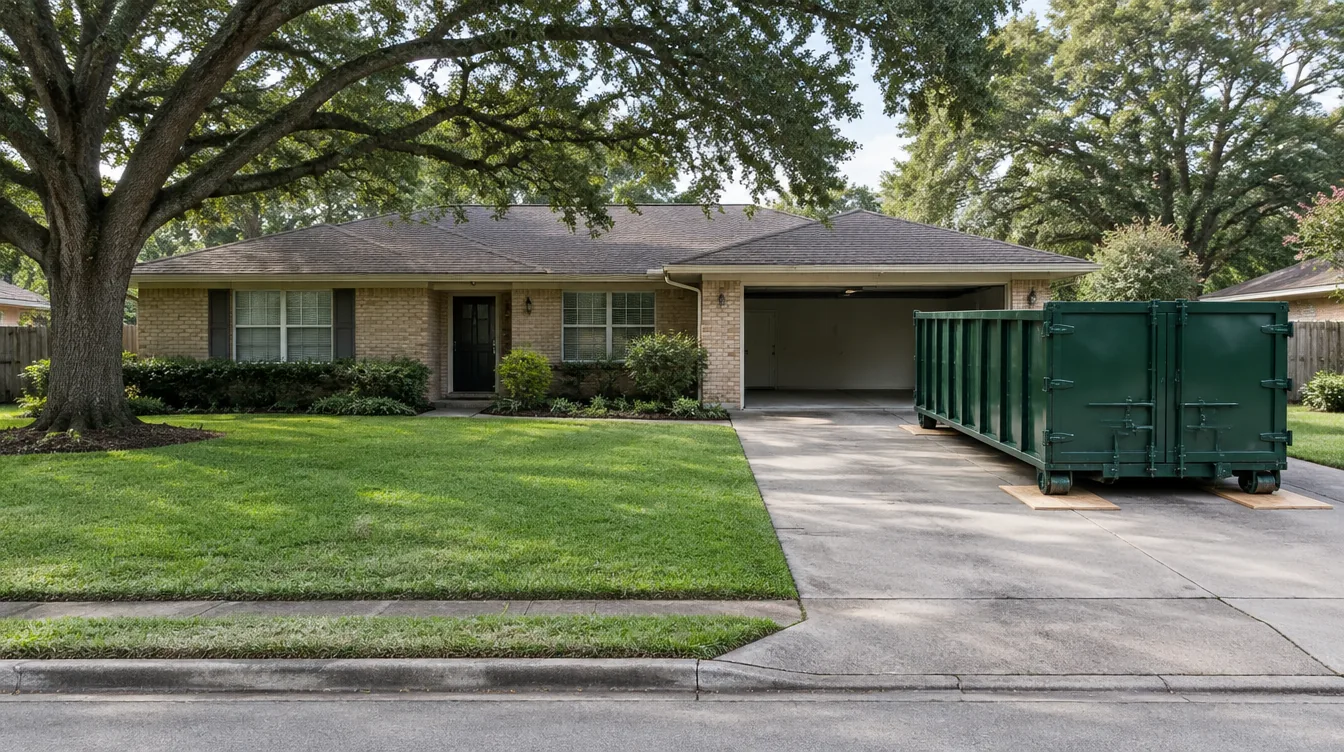
The best location is one that supports delivery, loading and collection while keeping the property usable. Begin with the proposed container position, then consider the route a truck must take to reach it. A box fitting between two measured points does not establish that the vehicle can turn, unload or retrieve it there.
Look at the property as a sequence of spaces: street approach, driveway entrance, any turn or gate, the set-down location and the loading route. Photograph that sequence in both directions. Show the whole entrance rather than a close picture of an empty patch of pavement. Include branches, wires, structures and other equipment that appear above or beside the approach.
Choose a second possible position if the property allows it. That makes it easier to discuss a practical alternative if the first location conflicts with truck access or a necessary entrance. Do not plan on moving the dumpster yourself after delivery.
Use actual container dimensions as one planning input
The 12-yard container measures 10 feet long by 8 feet wide by 4 feet 6 inches high. The 20-yard is 16 feet long with the same published width and height. The 30-yard is 18 feet long, 8 feet wide and 6 feet high. These dimensions help compare the parked equipment with the available area.
Truck movement, unloading space and any door opening require additional consideration. There is no single clearance measurement here that applies to every property and piece of equipment. Supply the measurements you can take safely and show the surrounding space so the placement can be discussed for the actual delivery.
A container’s footprint should also leave room for the cleanup itself. If the only path from the garage is blocked by the box, a shorter carrying distance has not produced a usable arrangement. Keep access for people, needed vehicles and any separate loading helpers.
Delivery preparation checklist
| Task | What to record | Why it matters |
|---|---|---|
| Describe the approach | Entrance, turns, gates and obstacles | Shows the route used by delivery and collection |
| Measure the proposed position | Available length and width | Allows comparison with the actual container |
| Plan the loading side | Material location and rear-door area | Avoids blocking your own working route |
| Reserve daily access | Garage, parking and shared entrances | Keeps the occupied property usable |
| Identify permissions | Owner, manager or relevant jurisdiction | Avoids treating space as automatic placement permission |
Separate a private driveway from public placement
A private driveway, shared drive and public right-of-way have different responsibilities. Obtain the property permission you need and review any applicable association or manager rules. Do not assume the renter alone controls a shared parking space or access road.
If you are considering a street, sidewalk edge or public right-of-way, resolve the applicable placement requirements before delivery. A quote request is not municipal authorization. Describe the proposed position accurately rather than calling it “the driveway” when part of the box or delivery setup would occupy public space.
Keep pedestrian routes and vehicle access available. Containers should not be used to claim parking space, block a neighbor or prevent access to utilities. For a property near a municipal boundary, use the actual site jurisdiction rather than relying only on a Houston mailing address.
Clear the route without creating a new hazard
Move parked vehicles and small obstacles that you control before the delivery arrangement. Do not trim trees near utilities or move electrical lines to create clearance. Show these conditions in the photographs and use a different placement plan when necessary.
Keep children, pets and bystanders out of the delivery area. One person should be available to explain the intended position and point out site restrictions without standing in the vehicle’s operating space. A prepared site reduces last-minute rearranging around moving equipment.
After placement, inspect the planned walking route before carrying material. Small items left near a threshold, wet surfaces and a pile leaning into the route can change an otherwise clear path. NIOSH’s lifting guidance emphasizes planning the task and keeping movement paths clear. Those principles are useful before the first item leaves the room, not only after a problem develops.
Sort the contents before the container arrives
Delivery preparation includes the material list. Separate belongings to keep, donation candidates and special-disposal products from the items intended for the dumpster. A marked keep area is particularly useful if several people will help load.
Asphalt roofing and shingles are prohibited. Keep tires, paint cans, liquids, compressed chemicals and hazardous waste out. Concrete and dirt require the designated material-specific arrangement, with their own lower loading limits. Furniture, appliances and unusual items should be identified in the rental request rather than added as a surprise.
Preparing the list early also improves size selection. Compare a pile of bulky empty items with a compact stack of dense material separately. The cubic-yard size describes volume; it does not establish included weight or suitability for a particular waste stream.
Keep collection in the delivery plan
The route that works for an empty container needs to remain usable when it is loaded. Tell other household members or project teams which parking and access areas must stay clear. Do not let a later material delivery or temporary storage pile occupy the collection approach.
Load below the top rail or any lower material-specific limit. Keep loose debris out of the surrounding driveway, preserve the rear-door area if it is used, and do not shift the container. If the project grows, discuss a revised rental or collection arrangement rather than stacking beyond the permitted level.
Your actual rental terms determine the delivery and pickup arrangements. Build the cleanup around those terms and the people doing the loading. Loading help is arranged separately from this self-loaded rental.
Walk through an occupied-home delivery plan
Consider a garage cleanup at a home where one car needs to leave each morning. The initial plan is to put a container directly in front of the garage because that makes carrying short. Before accepting that position, compare the parked footprint with the remaining vehicle route and the space needed to use the container’s door. If those activities compete, another position or size deserves consideration before delivery.
Now add the less visible parts of preparation: a gate across the drive, an item stored near the entrance and a donation pickup planned for the same day. Each needs a decision. Open or coordinate the gate under the actual access arrangement, move small obstructions that you control and give donation loading its own usable space. Do not assume all the vehicles and people can share one narrow approach at once.
The useful output is a simple description: where the container is intended to sit, how it is reached, what access remains open and who is loading. Send photographs that match that description. If the site changes before the agreed delivery, update the plan rather than relying on older photos.
This example is a planning sequence, not a prescribed placement for every driveway. It shows why a few accurate facts can be more useful than a long list of guessed clearance numbers. The same approach works for a side-yard entrance or a shared property: follow the actual vehicle and material routes, then resolve the conflict before the box arrives.
Send the details that make a rental quote useful
Provide the materials, approximate amount, project ZIP code, preferred timing and the photographs of your proposed placement. Add the gate width or available space you measured, plus any shared-access requirements. These facts give the project a clear starting point without making you guess the delivery equipment’s needs.
Request a dumpster rental quote ↗ Compare Spring Branch rental options around the cleanup you are preparing.
Equipment dimensions and preparation details are published in the container specifications and delivery preparation information.
Answered Questions
Should I reserve only the box’s measured footprint?
No. The vehicle approach, unloading operation and any rear-door opening need consideration in addition to the parked container. Show the surrounding space, not only a tape measurement of the box location.
Can the dumpster go on a shared driveway?
A shared driveway needs permission and a plan that preserves the access other users require. Include the shared arrangement and available space in the request before scheduling delivery.
What if a vehicle blocks the container on collection day?
Clear the collection route before the agreed pickup. A loaded box cannot be retrieved through a blocked approach, so tell everyone using the property which space must remain open.