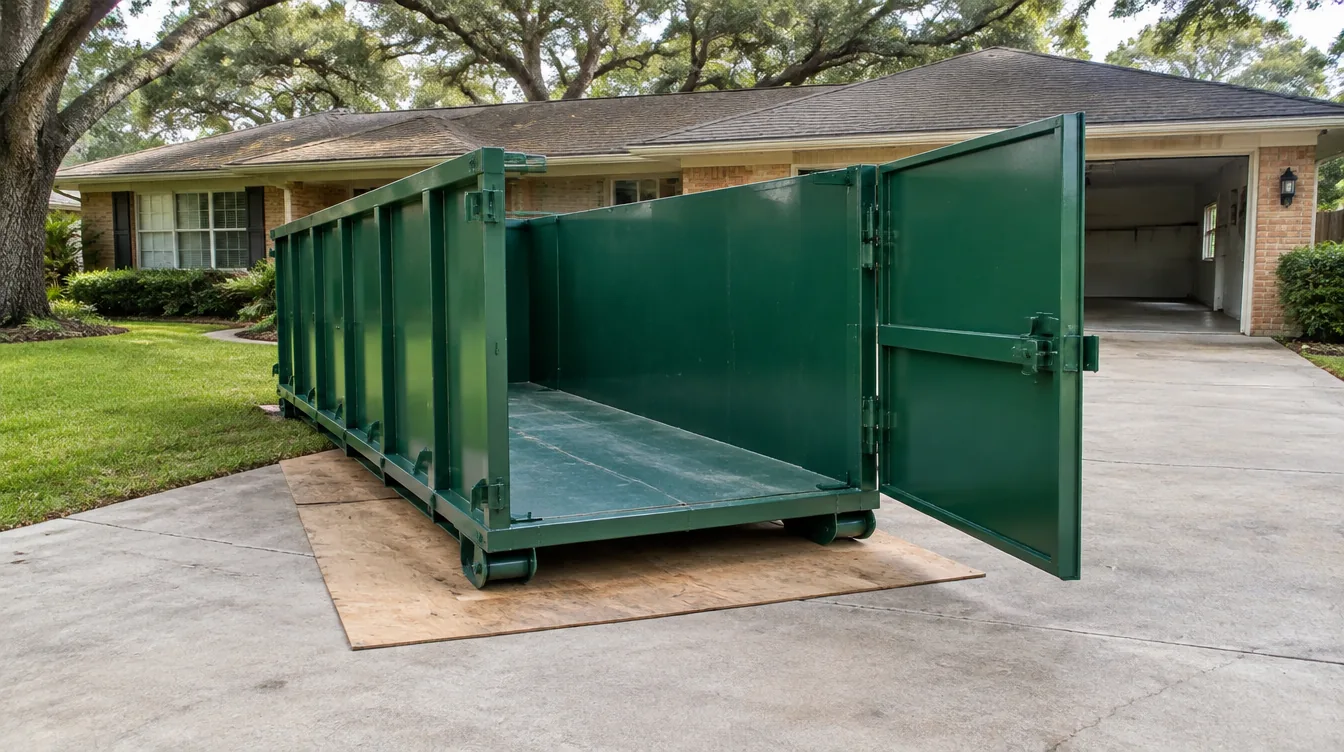
Moving Cleanout Dumpster Rental in Spring Branch
Moving cleanout dumpster rental in Spring Branch gives you a place to load discarded material while you prepare for a move, with loading help arranged separately. Sort what travels with you before booking space for what will leave as waste.
Separate the move from the discard project
A moving cleanout has two destinations: possessions going to the next home and material being discarded. Set up those destinations before loading starts. Mark a keep area, a possible donation area and a discard area so a helper does not have to guess whether a box belongs on the moving truck or in the container.
Start with rooms or storage areas you can finish early. Clearing every cupboard at once can spread belongings across the house and make the amount harder to judge. A completed room gives you a more useful estimate of what remains and reduces the chance of discarding documents, keys or household essentials during the last rush.
Donation decisions need their own schedule. A usable item is only a donation candidate until a recipient accepts it and transport is arranged. Keep those objects out of the waste pile while you resolve the plan. Our donation preparation guide helps you separate that work from container loading without assuming a donation pickup is included.
Choose capacity for what is leaving, not for the house size
A house's bedroom count is a poor container estimate. Some moves leave almost everything in use; others involve years of stored belongings. Describe the actual discard categories, the number of large objects and the rough pile dimensions instead of choosing a size because it is advertised for a similar house.
A 12 yard container is a starting point for a smaller cleanup. It measures 10 feet long, 8 feet wide and 4 feet 6 inches high. The 20 yard option extends to 16 feet with the same published width and height, which changes both usable volume and the space needed on the property.
For a larger bulky discard project, compare the 30 yard container, measuring 18 feet long, 8 feet wide and 6 feet high. Taller sides change loading access. More room does not approve more weight or guarantee that every item is accepted. Identify furniture, appliances and unusual contents before settling on the equipment.
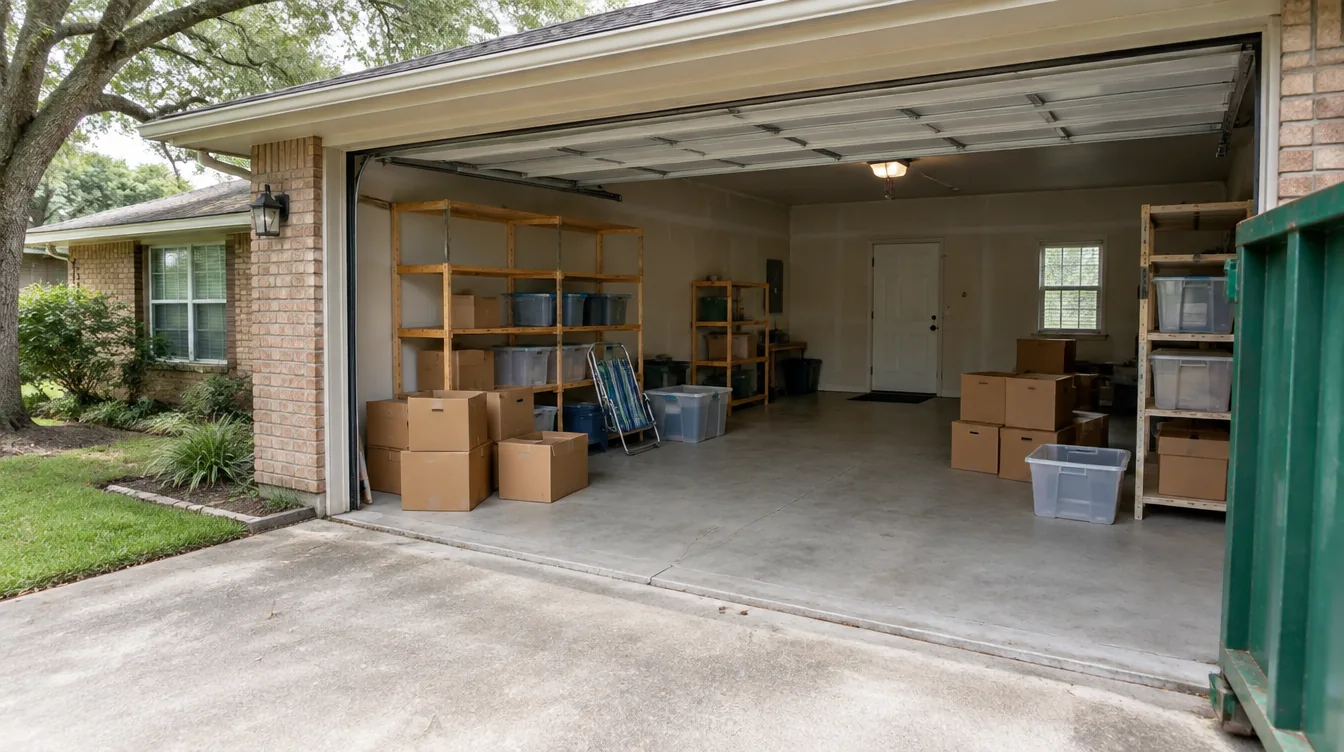
Keep a route for the moving truck
Plan the moving truck and dumpster together. A container that occupies the easiest loading position may force the movers to carry belongings farther or block their approach entirely. Draw a simple placement sketch showing the driveway, entrances, parked vehicles and where each vehicle needs to work.
Containers need truck operating space beyond their parked dimensions and room for the rear swing-out door. Identify the carrying route for discard material without closing the route for retained belongings. This is especially useful when family members and movers are working at the same time and need clearly separated destinations.
Mention gates, overhead wires, branches, tight turns, slopes and surface concerns with the rental request. Shared driveways or common parking areas also require permission from the person who controls the space. Resolve those arrangements before delivery, rather than treating an empty parking place as available for the whole rental period.
Match delivery and collection to the move sequence
Work backward from the day the property needs to be clear. Allow time to sort, arrange donation or reuse, carry discarded items and have the container collected. A moving date is a deadline for the whole sequence, not just a delivery request. Tell Long Point Roll-Off which dates are fixed and which are flexible.
The agreed rental period and actual availability are confirmed for the order. There is no assumed included weekend or universal number of rental days. If the cleanup depends on family arriving, a mover's schedule or a separate loading crew, include those dependencies when discussing the rental plan.
Avoid leaving the last discard decisions until the moving truck is waiting. An item that turns out to be prohibited or needs special handling may require another route. The rental timing guide explains how to coordinate collection and extensions before the agreed period ends.
Identify household items and stored products early
Furniture and appliances need specific identification and acceptance review. List a sofa, refrigerator, washer or bed frame individually rather than assuming all household contents follow one rule. Whether something can be carried safely and whether it can go in the rental are separate questions.
Keep paint cans, liquids, whole used or scrap tires, gases or compressed chemicals, hazardous and medical waste, carcasses and asphalt roofing material or shingles out of the container. A move is a useful time to discover what has accumulated in storage, but the rental cannot become a catch-all for products you no longer recognize.
Concrete and dirt require the designated 16 yard setup with its own loading limit. If the move also includes removing landscaping or old building material, describe that separately from household decluttering. A mixed project may need a different container plan or disposal route for part of the material.
Compare the whole cleanup cost
Moving-cleanout costs include more than the container if you need help sorting, carrying or dismantling. This rental is self-loaded, with help arranged separately. Compare like-for-like scopes so a container quote is not mistaken for the price of emptying a house.
The rental quote depends on the equipment, debris, approximate amount, address and rental plan. Check what delivery, collection, disposal allowance and rental period cover, and what changes could create additional charges. A longer cleanup, an extra haul or a materially different load should be part of the discussion before work expands.
You can request sizing help without choosing a container first. A clear description of the discard pile is more useful than a guess presented as a final order. Read the cost comparison guide and include your preferred dates, Spring Branch ZIP and access information with the request.
Technical planning: packing density and competing access
Loose objects use more than their solid material volume
A cubic yard is a measure of space, not an object count. A hollow wardrobe and a compact stack of boards can occupy similar outer dimensions while containing very different amounts of material. Packing order and empty spaces affect how a household discard load uses container volume.
Break down empty cardboard packaging where practical. Keep long pieces and awkward objects in the estimate rather than assuming every gap will be filled perfectly. Do not climb on the load or force unstable objects into position to reach a theoretical capacity. A safe, manageable loading plan matters more than squeezing out the final pocket of space.
Delivery space changes as the property empties
A moving project changes the site throughout the day. Boxes spread into the driveway, vehicles come and go and retained furniture may be staged outside. Treat the pickup route as reserved working space until collection is complete, not as another empty area for temporary storage.
Leave rear-door access usable and keep debris below the top rail or any lower material-specific limit. If an item cannot be moved or loaded with the people and equipment you have arranged, stop and change the handling plan. A larger container does not solve an unsafe carrying route.
Send a moving cleanup request with the useful details
Include the move-out deadline, preferred delivery and collection timing, a rough discard inventory and a proposed placement. Say who will be loading and whether the moving truck must use the same driveway. Those details make the quote match the actual sequence of the move.
Request a moving cleanout dumpster quote through Long Point Roll-Off. If you would rather have someone carry items from inside the home, review the difference between rental and full-service removal before arranging labor.Answered Questions
Should the dumpster arrive before the moving truck?
Often the discard work is easier to organize before the main move, but the right sequence depends on the driveway and your loading schedule. Plan both vehicles together and give the rental request your fixed move-out date so delivery and collection can be discussed as part of one sequence.
Can the rental include carrying furniture out of the home?
Loading assistance is arranged separately. Identify large items and the carrying route before delivery so your labor plan covers stairs, disconnection or dismantling where needed. Item acceptance still needs review even when you have people available to move it.
Can I book without knowing how much I will discard?
You can request help comparing sizes. Begin with the rooms already sorted, describe the likely remaining contents and explain what is still undecided. A rough inventory is more useful than assuming a whole-house label guarantees a container size.