Planning Your Dumpster Rental Timing
Plan dumpster rental timing around material readiness, the people loading, property access and the agreed delivery and collection terms. Do the sorting first where practical, and arrange loading help separately before counting on a work date.
Work backward from the deadline that actually matters
A moving date, contractor start or property handover can be a useful deadline, but the container is only one part of reaching it. List the work that must happen before the space is clear: deciding what stays, donation arrangements, special-material disposal, loading and final sweeping.
Give each task a responsible person and a realistic sequence. A dumpster arriving while everyone is still deciding what to discard may use rental time without advancing the cleanup. On the other hand, demolition or an active renovation may need the container on site before debris is generated. The right order depends on how the work produces material.
A request for a preferred date begins planning; it does not establish an available slot. Your actual rental agreement determines the period and arrangements. Do not assume that a particular number of days is included just because another operator or earlier rental used that term.
Separate readiness from availability
A site is ready when the placement and approach are usable, permissions are resolved and someone can explain the intended position. The cleanup is ready when the material categories and loading responsibilities are clear. Both matter before a scheduled delivery becomes useful.
If loading help is needed, arrange it separately and coordinate it with the agreed rental dates. A container sitting on site does not supply people to carry items out, dismantle furniture or disconnect appliances. Confirm those tasks before the day the cleanup depends on them.
Use a short written plan for a shared property or project. Record who communicates changes, which materials may enter the box and which access routes must remain open. This avoids two people independently arranging work that needs the same driveway at the same time.
A practical timing sequence
| Stage | Finish before moving on | What can change it |
|---|---|---|
| Scope the cleanup | Material list and retained belongings identified | New rooms, demolition discoveries or declined donations |
| Choose equipment and placement | Size/material fit and usable access | Gate, surface, vehicle or property permission limits |
| Coordinate people | Customer or separate helpers ready to load | Moving vehicles, contractor schedule or handling needs |
| Arrange delivery | Actual rental date and position agreed | Availability and site readiness |
| Prepare collection | Load within limits and route clear | Extra material or a blocked approach |
Give sorting and special disposal their own place in the schedule
Start with keep, donate, special-disposal and accepted-discard groups. Donation items should have a real recipient and handoff arrangement before they are subtracted from the expected disposal amount. If a recipient declines a large piece, the remaining load may change.
Household chemicals, liquids, paint cans, tires and other excluded contents need a different destination. Leaving them until the last day can make an otherwise finished cleanup feel incomplete. Use the relevant program instructions for your address and material rather than putting them in the container to meet a deadline.
For appliance preparation, resolve the actual utility or refrigerant requirements before scheduling the physical move. An unplugged appliance may still need specialized handling. Keep these tasks separate from the dumpster rental so each has the right person and destination.
Match rental duration to how the work creates debris
A garage cleanup may create accepted material in batches as shelves and storage areas are sorted. A move can have a fixed departure day with a separate vehicle loading plan. A remodel may generate material over several stages, and the mix can change as different trades finish their work.
Describe that pattern when requesting the quote. The useful question is how the actual rental period supports the work, not how long containers are “usually” rented. Compare the terms for included days, extension arrangements and collection alongside size and material category.
A longer period does not automatically resolve limited capacity. If the box reaches its top rail or lower material-specific limit early, more days will not create additional allowed space or weight. The remaining amount may require a revised container or collection plan.
For projects that mix household contents and building material, identify each group. The remodeling rental page focuses on material changes; moving cleanup rental focuses on coordinating belongings and access.
Plan a complete delivery day
Clear vehicles and obstacles from the agreed approach before delivery. Have the proposed position and property restrictions ready to explain. Keep people and pets away from the operating area rather than trying to sort the loading pile around moving equipment.
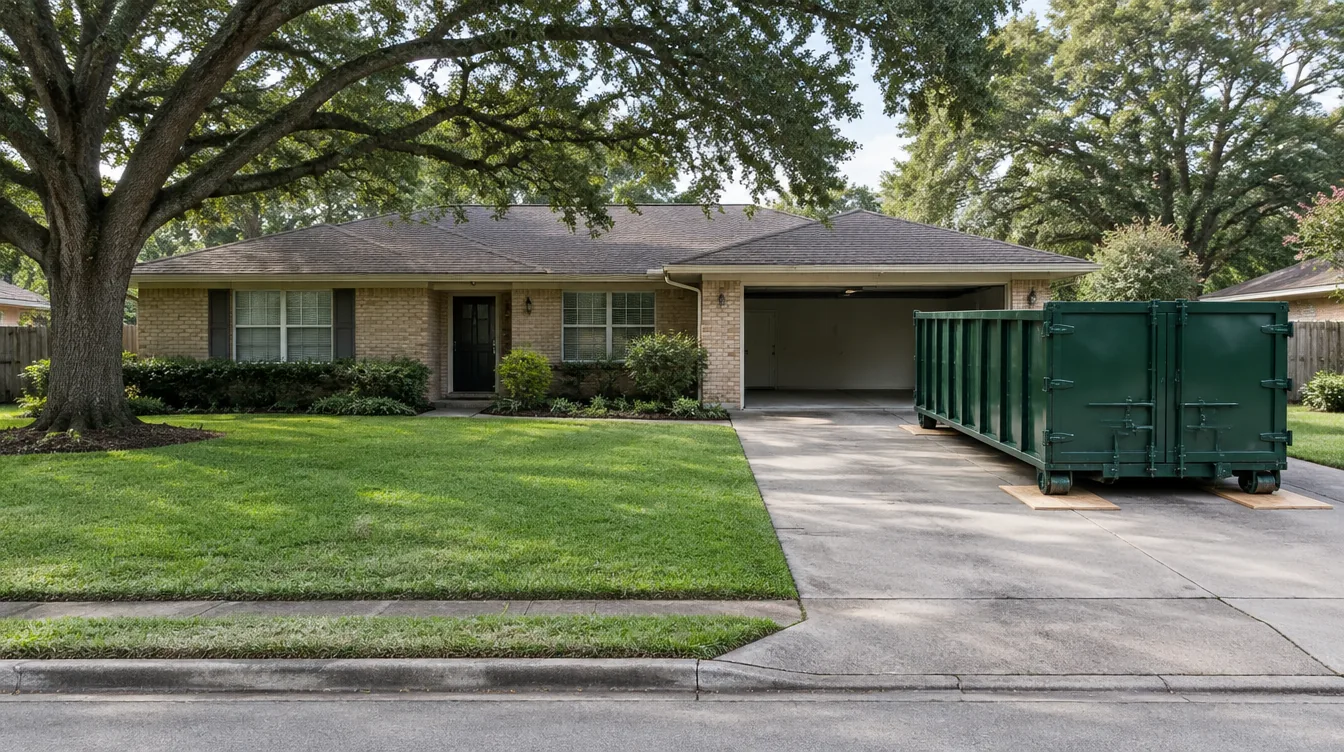
Allow the site to function after the container is in place. A box blocking a needed garage door or shared drive can interfere with the cleanup itself. Review the driveway placement guide before choosing the position, especially when moving vehicles or contractors also need access.
Do not leave sorting piles where the rear door must open or where the truck will return. A convenient staging area on the first day can become a collection obstruction later. Put that space into the project plan from the start.
Finish loading before the collection arrangement
Keep accepted material below the top rail or the lower material-specific limit. Do not add a final layer because a pickup is approaching. Extra debris needs a revised plan, not a rushed attempt to make the load fit.
Check the approach again near collection. Parked cars, delivery pallets or other project equipment may have occupied space that was clear at delivery. Tell everyone using the property when access is needed and who will remove those obstacles.
If the project changes, communicate while there is still time to discuss the actual arrangement. A new demolition phase, delayed helpers or more contents can affect size, material category or duration. Keep those changes out of the load until their effect is understood.
Build a sequence for a move with a fixed handover
Consider a household that must hand over the property on a particular date. Start with the belongings that will move, then separate donation candidates and special-disposal products. Establish the remaining accepted discard amount before selecting a container. This keeps the rental from becoming temporary storage while the household decides what to keep.
Next, compare the planned dumpster position with the moving vehicle route. If both need the same space, sequence their visits or choose a position that can accommodate the actual operation. Do not count on shifting a loaded container later to clear the way.
Coordinate the customer or separate loading helpers with the agreed rental period. Leave time in the work sequence for checking cupboards, storage and outdoor areas before the final accepted load. A forgotten bulky item can change the amount, and a forgotten chemical still needs a separate route even near the deadline.
Before the arranged collection, review the load level and clear the approach. Keep the handover task distinct from the rental pickup: collecting the box does not automatically clear donation items, excluded products or retained belongings around it. Each part needs a completed destination. The schedule is strongest when it names these separate results rather than treating one collection date as the solution to the whole move.
Use the quote request to connect the schedule with the scope
Provide the project type, materials, approximate amount, address or ZIP code, preferred timing and placement photos. Mention a fixed deadline and any separately arranged loading help. Those details make the request more useful than a date alone.
Request a rental around your project timing ↗ See Spring Branch dumpster rental for the self-loaded offer and equipment choices.
The published delivery preparation guidance and residential rental information distinguish site readiness and self-loading from the actual scheduling terms.
Answered Questions
Should I book the loading helpers before requesting the container?
Begin by identifying the help needed and the dates you can coordinate, then align the separate labor with the actual rental arrangement. Do not rely on a preferred date as a confirmed delivery.
Does extending the rental let me add more material?
Extra time does not increase the container’s permitted volume, weight or material limit. If the load is full or the waste category changes, the equipment or collection plan needs attention.
Can a moving truck and dumpster use the driveway together?
Only when the actual space and access plan accommodate both. Compare the vehicle paths, container position and loading times before using the same area for both tasks.
How many rental days are included?
The actual quote and rental agreement establish the included period and any extension terms. This planning guide does not assign a universal rental length to every project.