Planning Dumpster Placement on a Driveway
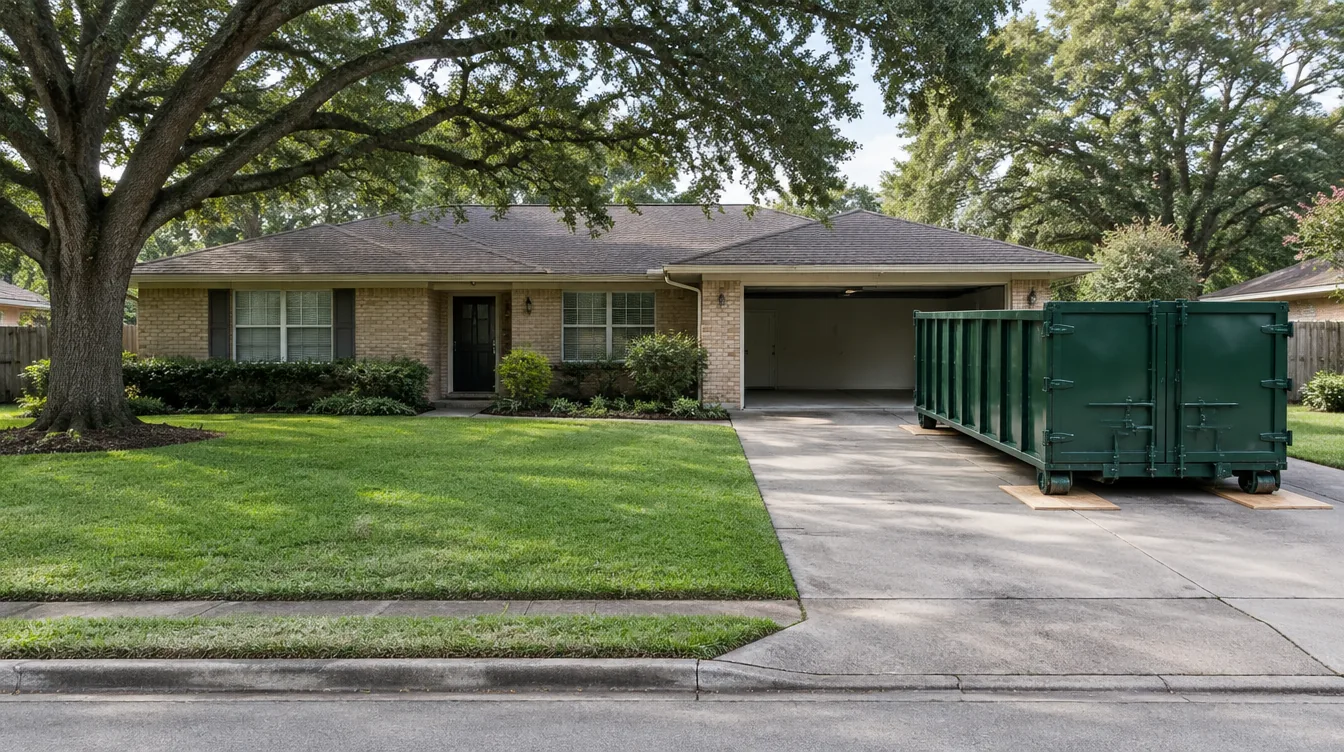
Plan driveway dumpster placement by checking the container footprint, truck approach, surface and loading route together. Leave room for necessary property access and preserve a clear route for the loaded collection.
The parked box is only one part of the space needed
A tape measure can tell you whether a container’s published length and width fit inside a proposed area. It cannot show by itself whether a delivery truck can enter, turn, unload and return to collect the box. Begin with the vehicle approach, then work toward the intended position.
Photograph the route from the road, including the driveway entrance and any changes in direction. Take another photograph looking back from the proposed position. A gate, overhead branch or parked car may be absent from a close picture of the driveway but still affect the delivery.
Choose a position based on the whole rental period. The container must support loading while the property remains usable, then be reachable for collection. A location that is convenient for the first pile may be inconvenient for the next stage of a renovation or move.
Compare the actual container dimensions
The 12-yard roll-off measures 10 feet long and 8 feet wide, with 4-foot-6-inch sides. The 20-yard measures 16 feet by 8 feet with the same side height. The 30-yard measures 18 feet by 8 feet and stands 6 feet high. These figures describe the container, not a universal delivery-clearance requirement.
The longer 20-yard box can offer more nominal capacity than the 12-yard while keeping a similar side height. The 30-yard adds more volume and higher sides. Think about the loading task as well as the amount to discard: a bigger box will not shorten a long carrying route or make lifting safer.
The trailer is not automatically a more compact substitute. Its published dimensions are 16 feet long and 8 feet 6 inches wide. Choose equipment from the actual setup and project rather than assuming that a different name means less space. Compare the full size overview before requesting a particular option.
Look beyond length and width
| Placement factor | What to observe | Why it changes the decision |
|---|---|---|
| Entrance and turning approach | Gates, corners, parked vehicles | The truck needs a workable route |
| Overhead conditions | Branches, wires, structures | The unloading operation needs suitable space |
| Surface and slope | Visible damage, softness, unevenness | Placement should suit the loaded equipment |
| Loading access | Distance, doors and walking path | The cleanup needs a safe material route |
| Collection access | Likely parking or project changes | The loaded box must remain reachable |
Describe the surface instead of assuming every driveway is suitable
A driveway can have cracks, uneven areas, drainage features or a surface that changes condition in wet weather. Include visible issues in the placement photographs and describe recent construction or any area you know cannot support vehicle access. Do not assume a surface is suitable merely because a passenger vehicle parks there.
Ground and surface conditions affect how the loaded equipment is supported. Existing cracks, soft ground and uneven sections can make one position less suitable than another. Include those conditions in the placement information and discuss the proposed surface and any protective arrangement before delivery.
Do not substitute soft ground, a utility cover or a landscaped area simply because it frees up the driveway. The support beneath the equipment matters after the container is loaded as well as during delivery. Use a position suitable for the specific container and truck operation.
Reserve a working path and rear-door space
Identify where the materials are coming from: a garage, side yard, house doorway or renovation room. Keep a clear route that does not require people to climb across retained belongings. Staging material close to the box is useful only if it leaves the approach and loading area usable.
A rear door can allow walk-in loading when the container and placement support it. Leave its opening clear. A pile set directly behind the door can remove that benefit before loading even starts. Plan the first bulky items without trapping later material behind them.
The 20-yard option is useful to compare when lower side height and rear-door access matter. The right choice still depends on material acceptance, amount and actual placement. Concrete and dirt need a designated material-specific arrangement rather than a general household loading plan.
Do not trade essential access for extra capacity
Keep the property’s necessary entrances and exits usable. For a household, that can include a vehicle that needs to leave each morning or a clear route to the front door. For a shared property, it can include resident spaces, business deliveries and access controlled by a manager.
Write down what must stay open before selecting the container. If the driveway serves two households, one person’s open area may be another person’s route. Obtain the required property permission and coordinate the intended rental period with everyone affected.
If a large container leaves no workable path, reconsider the size or position instead of assuming the cleanup can operate around the obstruction. A shorter container may be worth comparing, but its material capacity and delivery suitability still need to fit the project.
Separate private placement from street placement
A container on private property is a different planning situation from one occupying a street or public right-of-way. Determine the actual location and jurisdiction, then address any applicable public-placement requirements before delivery. Do not rely on a neighborhood name or Houston postal address to identify the responsible municipality.
Sidewalks and pedestrian paths should remain usable. A box should not extend into traffic or block utilities because only its main body was considered in the measurement. Include the complete intended position in the photographs and explain any boundary between private property and public space.
Homeowners association, lease or property-manager restrictions are also separate from delivery feasibility. An accessible spot may still require permission from the person who controls it. Resolve both the physical plan and the right to use the space.
Compare two positions using the same questions
If two areas appear suitable, evaluate them consistently. For each, record the parked container dimensions, route from the street, overhead conditions, loading path and access that must remain open. Take photographs from comparable angles. This makes the choice more concrete than saying one position “looks easier.”
A position closer to the cleanup can reduce carrying distance but block a garage or place the rear door against an obstruction. A position farther away may preserve access while creating more physical handling. Neither tradeoff can be resolved by volume alone. Consider the people loading and the material shape alongside the vehicle operation.
For a shared site, include the person responsible for the property in that comparison. Explain how long the position is needed under the actual rental arrangement and which routes it affects. Avoid relying on an informal assumption that another user will find different parking or stop using the entrance.
The useful next step is to send the two options with their photographs and measurements in one request. Identify your preferred position and the access you are trying to preserve. That gives the placement discussion a defined choice while leaving room for a site-specific equipment decision. If neither works, reconsider the container, loading method or disposal route before trying to force the equipment into unsuitable space.
Keep the final pickup in mind from the beginning
Preserve the truck approach throughout the rental. Other deliveries, parked vehicles and stored material can gradually occupy a route that was clear on delivery day. Tell the project team which area must remain open and review it again before collection.
Keep the load below the top rail or lower material-specific limit. Do not move the container yourself or pile extra material outside it for collection. If the project changes, revise the container or collection arrangement rather than making a last-minute loading problem.
Request a rental with placement photos ↗ Include the materials, ZIP code and intended timing. Published delivery preparation information and container dimensions provide the equipment starting points.
Answered Questions
Is a driveway wide enough if it is wider than the dumpster?
Not necessarily. Width at the parked position does not establish the vehicle approach, turning space, overhead clearance or unloading room. Include the full route in your photographs.
Can I keep using my garage during the rental?
Plan the container position around the access you need. Leave enough usable space for the relevant doors, walking route and vehicles rather than assuming garage access will remain after the box is placed.
Does a shorter container solve every tight-access problem?
No. A shorter box uses less parked length, but the delivery vehicle and unloading operation still need a suitable approach and position.
Can I relocate the box if I change my mind?
Do not move the container yourself. Resolve the preferred position before delivery and discuss any later change through the actual rental arrangement.