What Determines Dumpster Rental Cost?
Dumpster rental cost depends on the container, material, approximate amount, project address and rental plan. Compare the complete quote, including delivery, collection, the agreed rental period and disposal allowance, before deciding which offer fits your Spring Branch cleanup.
A useful rental price describes the whole job
A starting rate cannot tell you whether two quotes cover the same work. One may describe a different size, rental period or disposal allowance, and the material or address may change the discussion. Start by giving each quote request the same project description so the comparison has a consistent basis.
For a household cleanup, list the largest objects, loose contents and any unusual material. For a renovation, separate wood, drywall, cabinets, flooring and dense debris. Include the rough quantity, Spring Branch project ZIP, preferred dates and proposed placement. You can ask for help comparing sizes without treating an early guess as a final equipment choice.
The complete quote for the actual container, load and service plan gives you a useful rental price. That approach lets you see what the payment covers and what changes could make the final scope different.
Container size affects the plan, but bigger is not automatically better
Nominal capacity describes volume in cubic yards. It helps compare equipment, but the cheapest useful option is not simply the smallest size name or the most room per dollar. A box that is too small for the approved load may require a revised hauling plan; a larger box may occupy more space than the project needs.
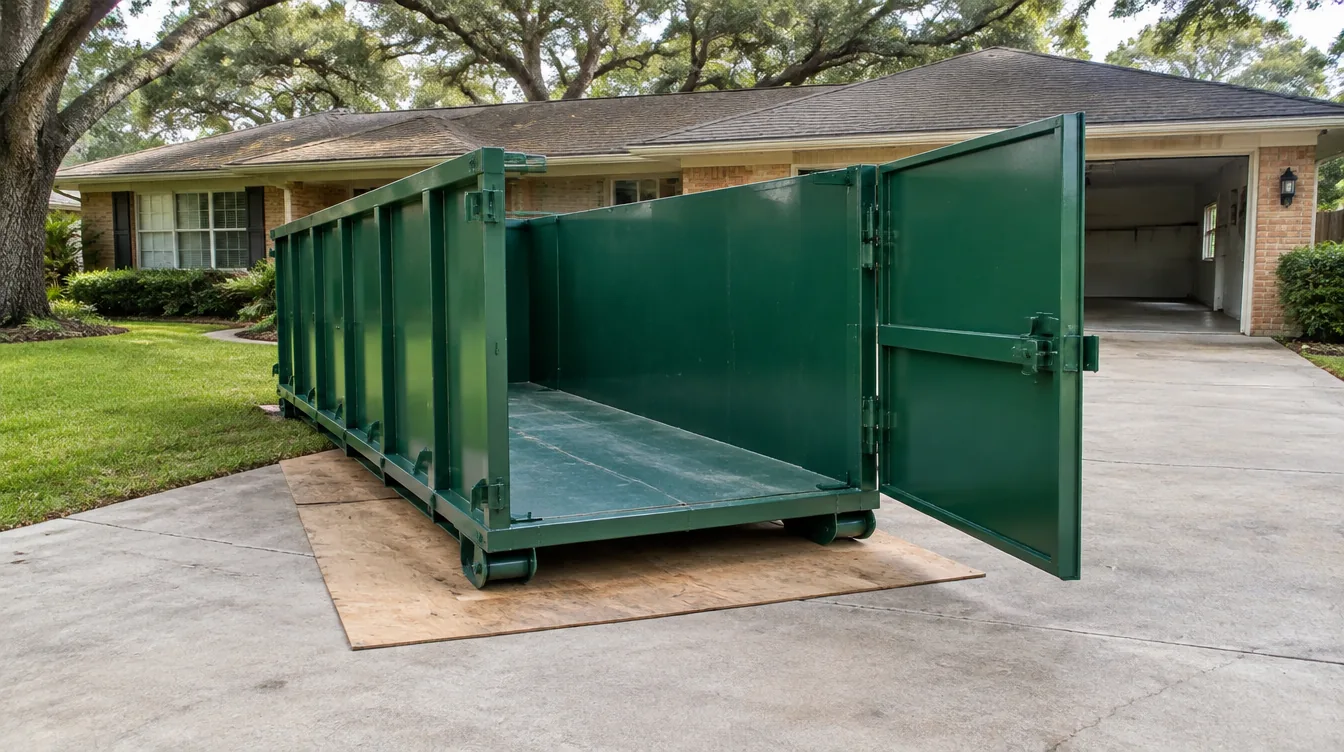
The 12 yard roll-off is 10 feet long, 8 feet wide and 4 feet 6 inches high. The 20 yard option is 16 feet long with the same published width and height. The 30 yard option is 18 feet long, 8 feet wide and 6 feet high. Those differences affect the loading and placement comparison as well as volume.
Concrete and dirt require the designated 16 yard setup with a material-specific limit. A larger general-debris container is not an alternative way to approve a heavy load. The 40 yard option is generally not delivered to residential sites. Use the size comparison to discuss the actual equipment rather than buying a theoretical capacity.
Material changes how space and weight are used
A pile of intact furniture can use substantial volume while leaving gaps between objects. Dense fragments of masonry can add considerable weight in much less space. Those loads cannot be priced or planned accurately from their outer pile size alone.
Identify furniture, appliances, fixtures and unusual contents individually for acceptance review. For renovation material, describe the actual components rather than relying on a broad construction-debris label. Concrete and dirt need their designated container plan, and other masonry should be identified separately.
Do not include prohibited material in the estimate as though an extra charge automatically makes it acceptable. Asphalt roofing material and shingles, paint cans, liquids, whole used or scrap tires, gases or compressed chemicals, hazardous and medical waste, and carcasses are excluded. Separate those items and use the materials guide to prepare an accurate request.
Ask what the disposal allowance includes
A disposal allowance is the amount or terms of disposal included in the agreed rental price. It is not the same thing as a container's volume or an equipment maximum. A quote needs its own included allowance and the applicable terms if the actual load differs.
Ask how weight is treated, what material-specific loading limit applies and what circumstances create additional charges. Preserve those answers with the quote so a low starting figure is not compared against another offer that includes a different allowance. Do not substitute a maximum equipment figure for the terms of your order.
The load must stay below the top rail and any lower material-specific limit. A dense load can reach its allowed limit before the container looks full. Planning within those limits is part of controlling the scope; overfilling is not a way to get extra value from the nominal size.
Rental duration and hauling are separate questions
Give the dates you would like the container and the time needed for the actual loading work. Confirm the rental period for the order rather than assuming a weekend, a week or a universal number of included days. A cleanup done in short sessions can need a different plan from a single organized loading day.
Ask how collection is arranged and how to request an extension before the agreed period ends. If more than one haul may be needed, discuss the number and sequence up front. A container remaining on site and an additional collection are different services, so the quote should explain how each fits the plan.
Moving dates, separate loading help and construction phases can all affect the schedule. The timing guide helps connect those dependencies before they become last-minute changes. Do not price a flexible project as though every date is fixed, or assume a fixed deadline guarantees availability.
Address and access belong in the quote request
The project address is part of the service plan. A quote discussion needs the location and relevant access details, not just the city name. Start the website request with the ZIP and share the full placement information directly when arranging the actual service.
Mention narrow entrances, tight turns, gates, overhead wires, branches, awnings, restricted work hours, slopes, soft ground and surface concerns. The truck needs operating space beyond the parked container's dimensions. A location that holds the box is not necessarily a location where delivery and collection can be performed as planned.
Keep the collection route available through the rental period. If vehicles, stored material or later work block the approach, the original access description is no longer accurate. Review delivery preparation when comparing site options, and resolve permission for shared or public space before scheduling.
Loading help belongs in the total cleanup budget
These are self-loaded rentals, with loading assistance arranged separately. If you need people to carry material, disconnect appliances or dismantle objects, give that work its own scope. A container quote is not a price for every task involved in emptying a room or completing a remodel.
Compare the total job when deciding between rental and crew-loaded removal. If one offer includes labor and another does not, their starting rates are not directly comparable. Also consider whether the people you have arranged can finish during the agreed rental period and move the intended items through the available route.
The rental and junk removal comparison explains that decision in detail. Neither model is universally cheaper. The right comparison keeps the intended outcome, material and responsibilities consistent.
A practical checklist for comparing quotes
| Quote item | What to record | Why it matters |
|---|---|---|
| Equipment | Agreed size and suitable material | The same nominal size may not describe the same load plan. |
| Hauling | Delivery, collection and any additional hauls | A project with several phases may need more than one load. |
| Time | Rental period and extension process | Your loading schedule must fit the actual terms. |
| Disposal | Included allowance and material-specific limit | Volume and equipment maximums do not define the included disposal. |
| Changes | Conditions for additional charges | Material, weight, access and timing can change the scope. |
| Labor | Who sorts, carries and loads | A self-loaded quote leaves this work to you or separate help. |
Use one written project description across the comparison. If an offer recommends a different size, note why rather than treating it as the same product at a different price. The recommendation may reflect material weight, bulky objects, access or the number of loading phases.
Keep acceptance and availability distinct from the price discussion. A quote for an approved scope does not allow a prohibited item, and a request is not a reservation. Confirm the actual plan before arranging work that depends on the equipment being present.
Technical detail: three limits that often get confused
Container volume, allowed loading and included disposal allowance answer different questions. Volume tells you how much space the box nominally holds. The loading limit tells you how the actual material may be placed in it. The allowance describes disposal terms included in the quoted service.
A light, bulky load may use its volume first. A dense load may reach the material-specific limit first. Neither situation changes the amount of disposal included in the quote. That is why a capacity diagram or a maximum equipment figure cannot serve as the complete price agreement.
Describe the waste accurately, keep it within the agreed boundaries and update the request if the scope changes. This is more useful than trying to estimate a whole job from the lowest visible rate or from someone else's cleanup. The actual material and site are the basis for the rental plan.
Request a scoped price for your Spring Branch project
Send Long Point Roll-Off your project type, ZIP, materials, rough quantity and preferred timing. Include large or unusual items and any access concerns. If the size is uncertain, ask for a comparison instead of omitting the information that would help choose it.
Request a dumpster rental quote to discuss the complete price and availability. Keep the material list and proposed dates with the quote so everyone is working from the same cleanup plan.Answered Questions
Is the smallest dumpster always the cheapest cleanup option?
A smaller box may suit a smaller approved load, but compare the complete job. If the amount requires another haul or the material needs a designated setup, the smallest nominal size may not match the scope. Describe the actual debris before choosing on price alone.
Is a container equipment maximum included in the rental rate?
No. An equipment maximum is separate from the disposal allowance included in the quote. Record the actual allowance, material-specific loading limit and any applicable extra-charge terms for the order.
Can I get a quote before I know the right size?
Yes. Give the material, approximate amount, project ZIP, preferred timing and placement concerns, and say you need help comparing sizes. Those details support a useful quote without treating a size guess as a reservation.
What should I do if the cleanup grows after delivery?
Discuss the changed material, amount or timing before continuing beyond the agreed plan. An additional haul, more rental time or a different waste stream can require a revised scope, and prohibited items remain excluded regardless of the original quote.