Dumpster Sizes for Spring Branch Cleanups
Compare 12, 20 and 30 yard dumpsters for a Spring Branch cleanup by material, container footprint and loading height. You load the dumpster; loading assistance is separate.
Compare the container and the way you will use it.
A yard in a dumpster size means a cubic yard, a unit of volume equal to 27 cubic feet. The nominal capacity describes the container class. Published outside dimensions help with placement and side-height comparisons; multiplying those dimensions does not establish exact usable interior capacity or permitted weight.
Start with the materials and approximate amount. Then compare the footprint, side height and how the load will be carried into the container. A larger box can provide room for bulky light material while dense debris reaches a material-specific limit much earlier. Your quote's allowance and loading instructions control the load.
| Option | Published dimensions | Planning use |
|---|---|---|
| 12 yard | 10 ft long × 8 ft wide × 4 ft 6 in high | Small cleanup starting point; shorter footprint |
| 20 yard | 16 ft long × 8 ft wide × 4 ft 6 in high | More length with the same published side height |
| 30 yard | 18 ft long × 8 ft wide × 6 ft high | More room for larger bulky cleanup or renovation |
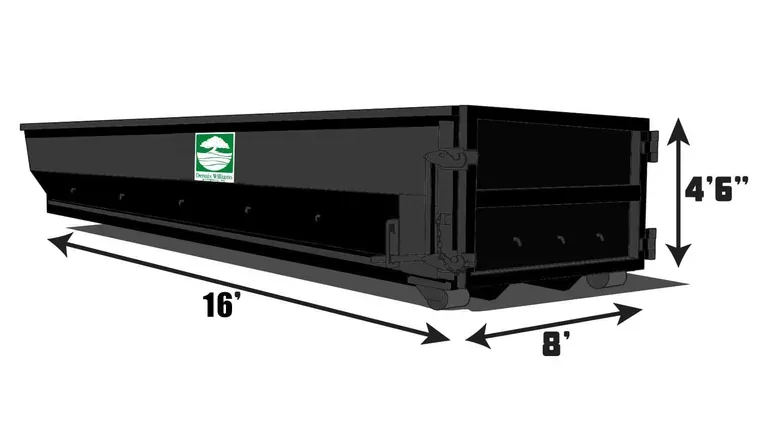
Loading height and door access can change the choice.
The 12 and 20 yard options share a published 4 foot 6 inch side height. The 30 yard option has 6 foot sides. Those differences matter when you plan how to load, particularly if the project involves carrying material by hand.
A rear door can provide walk-in access when the container is safely placed and the door can open. Its swing area must remain clear. Do not assume an open door solves every carrying task or makes an awkward item safe for one person to move. Include loading help as a separate arrangement if needed.
Compare the actual garage cleanup or remodeling project with the container, rather than choosing by a number alone.
Dense material and unusual items need another check.
Concrete and dirt use the designated 16 yard setup with material-specific limits. That is not permission to fill a dense load to the top, and it is not interchangeable with a household cleanup container. Identify dense materials individually before selecting a rental.
The 40 yard option is 22 feet long, 8 feet wide and 6 feet 5 inches high and is generally not delivered to residential locations. A trailer option is published at 16 feet long, 8 feet 6 inches wide and 4 feet high; it is not automatically a compact alternative to the 12 yard roll-off. These options belong in a specific project discussion rather than a generic largest-is-best choice.
Furniture, appliances and fixtures require specific identification and acceptance review. Asphalt roofing material and shingles are excluded. Review the material rules and explain unusual contents in the request.
Leave room beyond the box.
The dimensions above are the container footprint, not a universal delivery clearance. A truck needs an approach and unloading area, with overhead conditions and turning space considered. A rear loading door also needs room beyond the closed container.
Describe the proposed placement, surface, slope, gates, nearby vehicles and shared access. If the plan involves public property, resolve the applicable permission and requirements separately from your private-property arrangement. The driveway placement guide helps organize those details.
Request with the material, approximate amount and property ZIP. The quote can then establish the size, rental period, allowance and collection arrangements that fit the actual job. Loading remains your responsibility or a separate arrangement.
Answered Questions
Does a larger container mean I can load more weight?
Not automatically. Nominal volume and permitted weight are different. The material, equipment setup and rental allowance determine the acceptable load.
Are these dimensions the truck clearance?
No. They describe the published container dimensions. The truck approach, unloading area, overhead conditions and door swing need additional planning.
Which setup is used for concrete or dirt?
Concrete and dirt require the designated 16 yard setup and its material-specific limit. Describe the material separately rather than mixing it into a household cleanup load.