Houston Heavy Trash vs Dumpster Rental
Houston heavy trash can handle eligible residential set-outs on the assigned City schedule and within its limits. Dumpster rental provides a separately arranged container you load, which can suit a larger or differently timed cleanup when the materials are accepted.
Check eligibility before comparing convenience
The City’s heavy-trash service is limited to occupied residential units receiving City of Houston services. Multi-residential structures with more than eight units are not eligible under the published collection rules. Living in a property with a Houston mailing address does not by itself establish the service arrangement.
Use the City’s address lookup for your actual schedule. The current page describes heavy-trash collection every other month, up to six curbside collections per calendar year for eligible addresses. Do not plan a cleanup from an old odd-month or even-month rule, or from the date a nearby property used.
If your address is eligible, start with the amount, material and timing. A permitted set-out that fits the assigned collection can avoid renting a private container. If the project cannot meet those conditions, compare other accepted routes rather than putting everything at the curb and hoping it is collected.
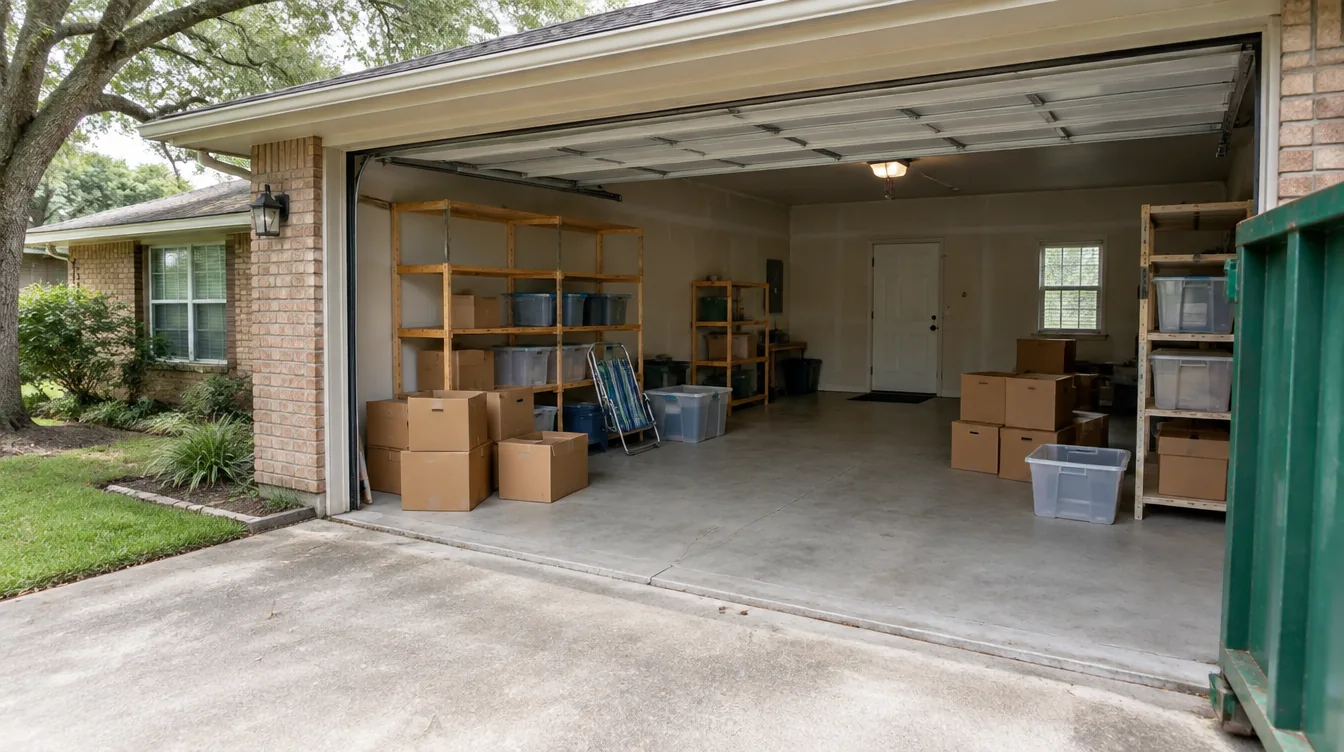
City set-out and private rental serve different tasks
| Decision | Houston heavy trash | Self-loaded dumpster rental |
|---|---|---|
| Eligibility | Eligible occupied City-served residences; published exclusions apply | A private rental request scoped to the actual site |
| Timing | Assigned collection and set-out window | Delivery, rental period and collection arranged for the project |
| Amount | City set-out and material limits | Container, weight and material limits in the rental terms |
| Loading work | Resident prepares the allowed curbside set-out | Customer or separate helpers load the container |
| Unsuitable material | City exclusions and special-disposal rules | Rental-specific prohibited and review-dependent materials |
Know the current City amount and placement rules
The published heavy-trash limit is 8 cubic yards per set-out. The City also describes up to 4 cubic yards of resident-generated building material, excluding shingles, brick, plaster and concrete. These are municipal allowances for that program, not the weight or material terms of a private rental.
The current set-out window runs from 6 p.m. on the Friday before collection through 7 a.m. on the scheduled collection day. Place allowed items just behind the curb in front of the home, rather than in the street or on sidewalks. Keep the pile away from obstructions and do not block pedestrians or vehicles.
Contractor-generated debris is excluded from City heavy trash. If a contractor is generating tree, construction, roofing or remodeling waste, do not treat the residential curbside program as the project’s automatic disposal plan. Clarify the project’s waste arrangement before the work starts.
Check the current City heavy-trash page before setting material out. Collection operations and address assignments can change, and the address-specific tool is more useful than a remembered neighborhood pattern.
Separate household items from special-disposal material
The City lists furniture, mattresses, box springs and several household appliances among its junk-waste categories. Refrigerators and freezers require a certified-technician tag showing refrigerant removal. That preparation is a specialized task, not permission to cut a line or vent refrigerant yourself.
Household hazardous waste and electronic scrap do not belong in the heavy-trash pile. The City points residents toward Environmental Service Centers or the appropriate special-material route. Dirt, sod, soil and roofing materials are among the published heavy-trash exclusions. A mixed pile containing unauthorized material can be refused.
Keep City rules separate from rental rules. A City-accepted item is not automatically accepted in a private dumpster. Conversely, the presence of an item in a private quote does not make it eligible for curbside City collection. Each route needs the actual material and preparation requirements.
When a rental better matches the project
A dumpster can be useful when an accepted cleanup load needs to accumulate on site over the agreed rental period. A garage cleanout rental supports staged sorting and loading; a moving cleanup rental can be planned around the work before a move. Both still require suitable placement and people to load.
Private rental is not a universal way around exclusions. Asphalt roofing and shingles are prohibited for this offer. Concrete and dirt require a designated 16-yard setup with specific material limits. Furniture, appliances and unusual contents need individual identification before acceptance and size selection.
Compare the whole job: time available, accepted materials, loading labor, container placement and actual quote terms. Do not assume a dumpster is always cheaper or faster than municipal collection. The useful choice is the route that fits the eligible material and the project schedule.
Cubic-yard limits do not measure the whole job
A cubic yard is a volume measure. A loosely stacked set-out or awkward furniture can take space differently from tightly arranged boxes. Neither the City’s volume allowance nor a rental’s nominal size establishes how much a person can safely move or the weight allowed in a particular container.
For a rental request, describe the actual material groups rather than converting the City’s set-out limit into a guaranteed box size. A compact masonry pile and bulky household contents are different loads. Use the size comparison with the material rules, not as a promise that a certain house or room count always fits.
Loading help is arranged separately. Whether you choose a City set-out or a private rental, plan safe movement of heavy and awkward items. Do not move an appliance or large piece of furniture merely to make a disposal request if the handling itself would be unsafe.
Compare two realistic cleanup situations
An eligible resident with a small amount of allowed furniture and the correct upcoming collection can start with the City route. Verify the assigned day, prepare the items within the set-out window and keep the total and contents within the published rules. The important condition is that all parts of that plan fit, rather than only the item category.
Now consider a property preparing for a move before its next assigned collection. The same item list may need a different timing arrangement. A private container may be useful if the site is suitable, the contents are accepted and people can load it. That does not mean the rental is automatically cheaper, only that its arranged timing can be evaluated against the deadline.
A contractor remodel is a different case again. Contractor-generated debris does not become eligible City material because the work took place at an occupied home. Identify the renovation materials and responsible disposal arrangement before work starts. Private restrictions still matter: this rental offer excludes asphalt roofing and shingles, and dense concrete or dirt has a designated setup.
Use these examples to separate four questions: who receives the service, what material is allowed, how much is allowed and when it can leave. A route is useful only when the answers work together. This approach also keeps special-disposal items from slipping into a general pile simply because the rest of the cleanup is urgent.
Choose a route before the cleanup leaves the house
For City service, verify eligibility, the assigned day, allowed amount and each material category, then stage only the permitted set-out in the correct window. Keep special waste and donation candidates separate. This prevents the curb from becoming storage for items without an accepted destination.
For a rental, provide the cleanup materials, approximate amount, address or ZIP code, timing and proposed placement. Include appliances and dense debris as separate entries. The request can then be scoped to a real container and loading plan.
Request a Spring Branch dumpster quote ↗ For household chemicals and other special material, review the Environmental Service Center instructions.
Answered Questions
Can my apartment building use City heavy trash?
The City’s published service excludes multi-residential structures with more than eight units and is limited to eligible occupied residences receiving City services. Check the actual property service arrangement instead of assuming every apartment has curbside heavy-trash collection.
Can contractor debris go out with my household pile?
No. Contractor-generated debris is excluded from the published City program. Make the disposal arrangement part of the contractor project rather than adding that material to a residential set-out.
Can I set material out whenever the pile is ready?
Use the assigned collection and the published set-out window. Staging material early does not create an extra collection or make an ineligible pile acceptable.
Does private rental include people to load?
This offer is self-loaded dumpster rental. You load the container or arrange separate loading help, with the actual materials and rental terms agreed for the project.