How to Load a Dumpster
Load a dumpster by separating prohibited items first, keeping a clear handling route and arranging accepted material without exceeding the top rail or a lower material-specific limit. Plan safe help for heavy or awkward pieces before you begin.
Sort first so the load stays within its rental category
A useful loading sequence starts outside the container. Separate retained belongings, donation candidates, hazardous products and any material that needs its own disposal arrangement. If several people will help, show them those groups before the first load. A marked pile can prevent the wrong item from entering a container that is already difficult to unload by hand.
Identify furniture, appliances and dense material as part of the rental request. Asphalt roofing and shingles are prohibited. Keep liquids, paint cans, tires, compressed chemicals and hazardous waste out. The material guide explains why a room or project label does not establish acceptance.
Self-loading means that you or separately arranged helpers do the physical work. Do not assume the delivery driver will carry items, dismantle furniture or disconnect appliances. Those are separate tasks that should be resolved before you schedule the people doing the cleanup.
Choose the working route and lifting method
Clear the path from the material to the container, including thresholds and turns. Move small obstacles before carrying a large item. If an object cannot pass through a doorway safely, stop and change the handling plan rather than forcing it through while someone supports its weight.
NIOSH guidance recommends planning the lift, keeping the path clear and using help or suitable equipment for heavy and awkward objects. There is no single lifting number that makes every item safe for every person. Shape, grip, balance, distance and body position all change the task.
Use appropriate footwear and protective equipment for the materials you are handling. Avoid sharp edges and unstable pieces, and keep children and bystanders away from the working route. A cleanup that is too physically demanding needs a separate loading arrangement rather than a larger container.
Keep the route visible as the job progresses. Packaging, tools and small debris can accumulate where the path was clear an hour earlier. A short pause to remove obstacles is better than walking around a growing pile while carrying something you cannot easily set down.
Use the rear door only when the setup permits it
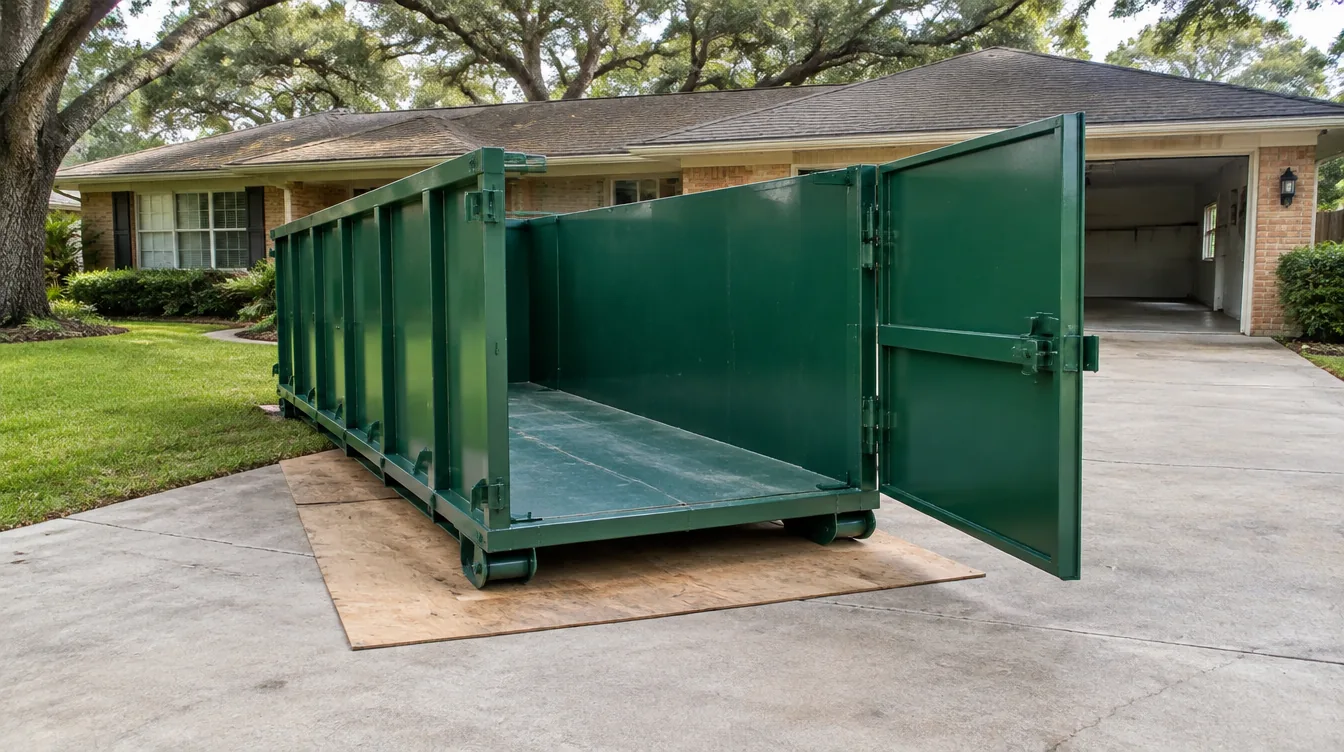
A safely placed rear door can reduce the need to lift items over a side wall. The published 20-yard option includes rear-door walk-in loading when the placement allows safe use. Preserve the door’s opening and the approach to it instead of staging a disposal pile directly behind the container.
A door is not a reason to enter an unstable load. Plan the early items so access is not blocked before later material is ready. Do not climb on stacked debris or stand inside a shifting pile to rearrange it. Heavy pieces that cannot be handled safely should change the loading plan.
When you compare sizes, remember the side-height difference. The 12-yard and 20-yard containers have 4-foot-6-inch published sides; the 30-yard is 6 feet high. More nominal volume can come with a different loading task, so compare 20-yard equipment with the 30-yard option before selecting only by capacity.
Loading decisions in sequence
| Stage | Useful action | Avoid |
|---|---|---|
| Before loading | Separate keep, donate and excluded items | Deciding about chemicals after they are buried |
| Early loads | Keep the walking route and door area usable | Blocking access with a pile at the opening |
| During the cleanup | Arrange accepted material under the limits | Using body weight to compact unstable debris |
| Before collection | Clear the approach and check the load level | Adding an extra top layer above the rail |
Packing space is different from packing weight
Bulky objects can leave voids, or empty spaces, between them. Some accepted material can be arranged to use the floor area more efficiently, but the goal is a stable, permitted load rather than maximum compaction. Breaking down an item is appropriate only when it can be done safely and the resulting materials are acceptable.
Dense debris creates the opposite problem: it can use little volume while adding substantial weight. Concrete and dirt require the designated 16-yard arrangement with material-specific limits. Do not spread dense material into a household box to make the load look less concentrated or cover it with lighter contents.
Cubic yards describe a container’s nominal volume. Included weight and permitted material limits belong to the rental terms. A container that looks partly empty may still be at its loading limit. Adding more because there is visible air space is not a safe substitute for the agreed material plan.
The top rail is a limit, not a target to exceed
Keep the material below the top rail and obey any lower limit for the specific load. Long pieces should not protrude above the permitted level or create an unstable edge. If one awkward object determines the overall height, its placement needs attention before other material is piled around it.
Do not stand on debris or climb the outside of the container to push the load down. Do not burn contents or add water to reduce their apparent volume. A rental container is not equipment for altering waste; it is the place to hold accepted material for transport.
If the cleanup is larger than expected, stop before overloading. A revised size or collection plan addresses the extra amount. Stacking above the limit creates a problem for collection and does not increase the capacity included in your rental.
Keep collection access open as the job finishes
Leave the truck’s approach available and remove material staged outside the box. A parked vehicle, skip pile or pallet placed in front of the container after delivery can prevent collection. Tell everyone using the property which area must remain clear.
Keep separate-disposal items out of the surrounding pile. Otherwise, the end of the project can leave a ring of chemicals, appliances or donation candidates without a destination. Handle these arrangements as part of the original cleanup plan so collecting the dumpster actually finishes that part of the work.
For a garage cleanup, a room-by-room approach can keep retained belongings accessible. For moving cleanup, leave vehicle space for the move as well as the dumpster collection.
A staged loading plan for bulky and loose contents
Consider a cleanup with accepted furniture, boxes and loose household material. Begin with a clear keep area, a separate excluded-material area and a route to the container. Identify which pieces require more than one person or handling equipment. Do that before carrying, while the item can still be left safely in place.
Work in manageable groups rather than emptying every room into the driveway at once. Arrange the first accepted items so they do not block the next stage of loading or the door area. Keep an eye on the height as well as the remaining floor space. A long object projecting upward can create a height problem before the surrounding box looks full.
As the remaining pile changes, reassess it from outside the container. Do not climb on material to inspect or compact it. If the next bulky piece cannot be safely placed under the limit, stop and consider the remaining capacity and collection arrangement. The cleanup deadline does not change the physical size or permitted load.
Finish by checking the ground around the container and the vehicle approach. Put tools away, remove trip hazards and make sure no special-disposal products were left as part of a pile at the rear. This final pass is part of loading, not a task to leave for collection. It makes the intended result clear: accepted material inside the agreed limits and an accessible container ready for its arranged pickup.
Choose the rental around the material and the people loading
List the accepted cleanup material, largest pieces and approximate amount, then describe the proposed placement and loading route. Explain if the job needs separately arranged help. A container choice works best when volume, weight, access and physical handling are considered together.
Request a self-loaded rental quote ↗ Published loading and material restrictions govern the load; NIOSH lifting guidance supports planning the physical work.
Answered Questions
Can I climb into the box to make room?
Do not climb onto an unstable debris load or use your body weight to compact it. Keep a safe loading route and change the container or collection plan when the accepted material will not fit below the limits.
Should heavy material go in a bigger dumpster?
Not automatically. Material density and the permitted load matter before nominal volume. Concrete and dirt use a designated arrangement with specific limits, rather than a larger general household box.
Can I keep a donation item in the dumpster until pickup is arranged?
Keep donation candidates in a separate protected place. Once an item is mixed with the load, retrieving it may be unsafe and its condition may deteriorate.
What happens if I still have material after reaching the limit?
Stop loading and arrange the additional capacity or collection needed for the remaining material. Do not add a top layer above the rail or ignore a lower material-specific line.